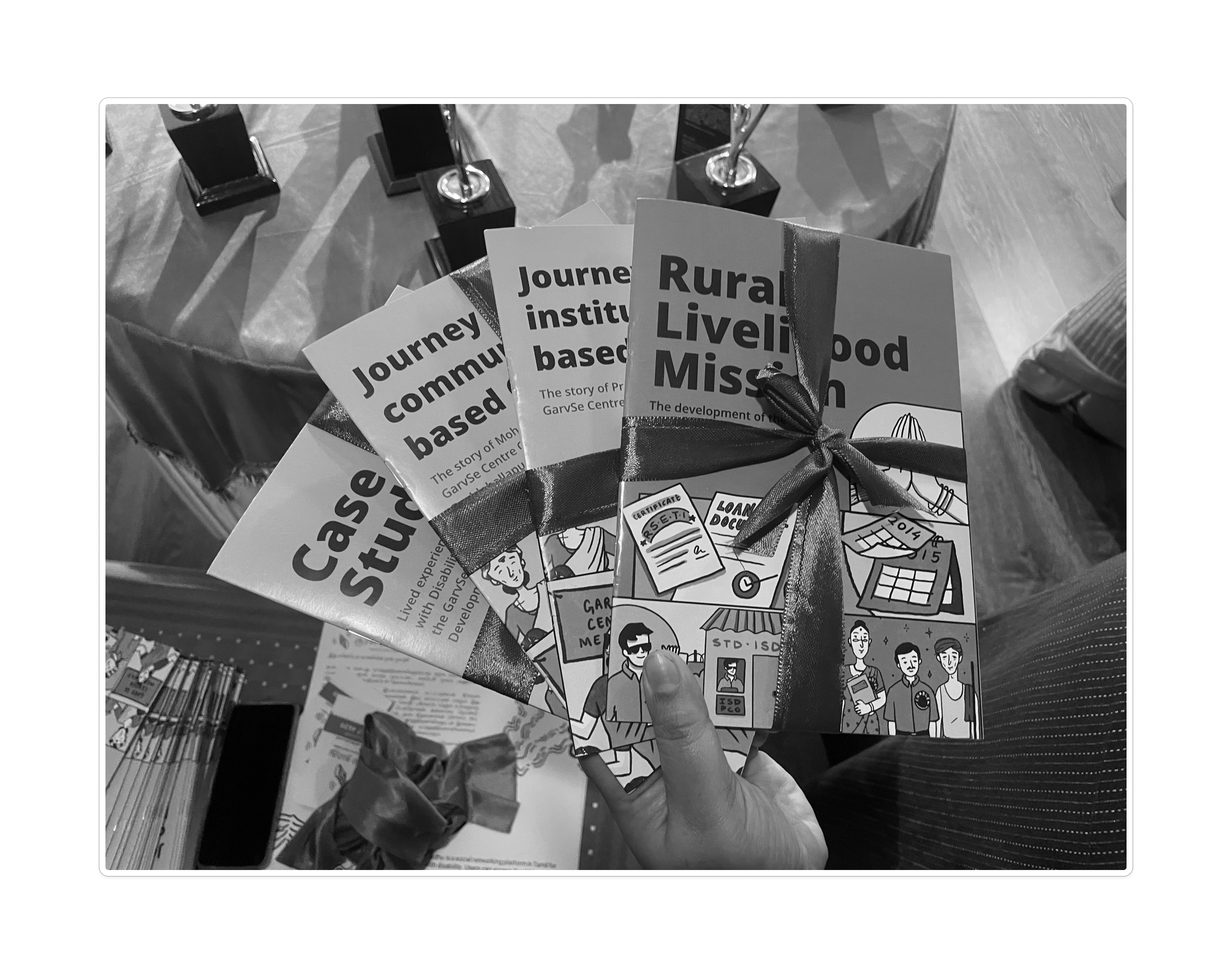
Enable India approached Design Beku to help them design a co-created archive of the organisational and lived knowledge of the Officers who provided employment opportunities for people with disabilities in various districts of Karnataka.
This archive was made available as a knowledge management solution for for further annotation and curation to aid the workers that enabled livelihood training services for different communities of PwDs.
As part of this Pilot, my role was to create participatory ways of recognizing, experimenting and encouraging the use of the archive
Knowledge Assets
A Lived Experience Database that surfaces the knowledge Officers build while setting up jobs for people with disabilities in India
We started off with a few initial insights
- Creating a co-archival space for Lived Experiences meant that archiving has to become a native process to the Officer’s existing workflows
- Understanding the nature and structure of the GarvSe Center Infrastructure to imagine the contents of the archive meant that we had to learn what a good knowledge asset is in an emergent context. How would you discover and re-contextualise it?
- This Lived Experience Archive would contain units of tacit and organisational knowledge that we called “assets”.
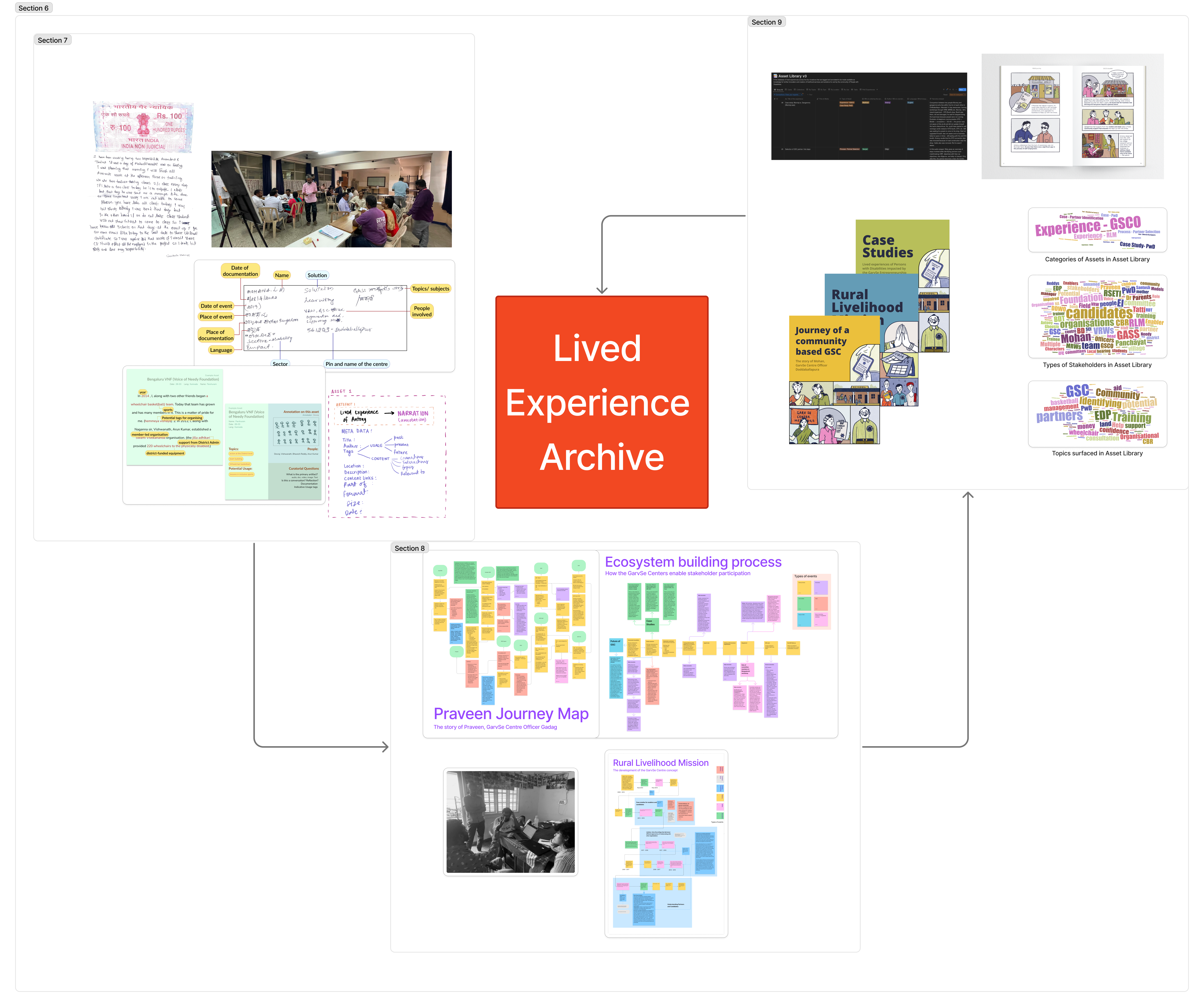
As we read through their existing documentation, we prototyped what 1 singular asset in this archive would be structured like.
Additionally, we prototyped an organisational process for the officers to contribute to and benefit from the archive. We used a google sheet, a google form and a Notion Database to demonstrate what the process below could look like
However, we would need to test and iterate to make this archive useful for the Officers that worked with People with Disabilities. We intended to validate and demonstrate how contributing to the archive and using it would directly benefit their work.
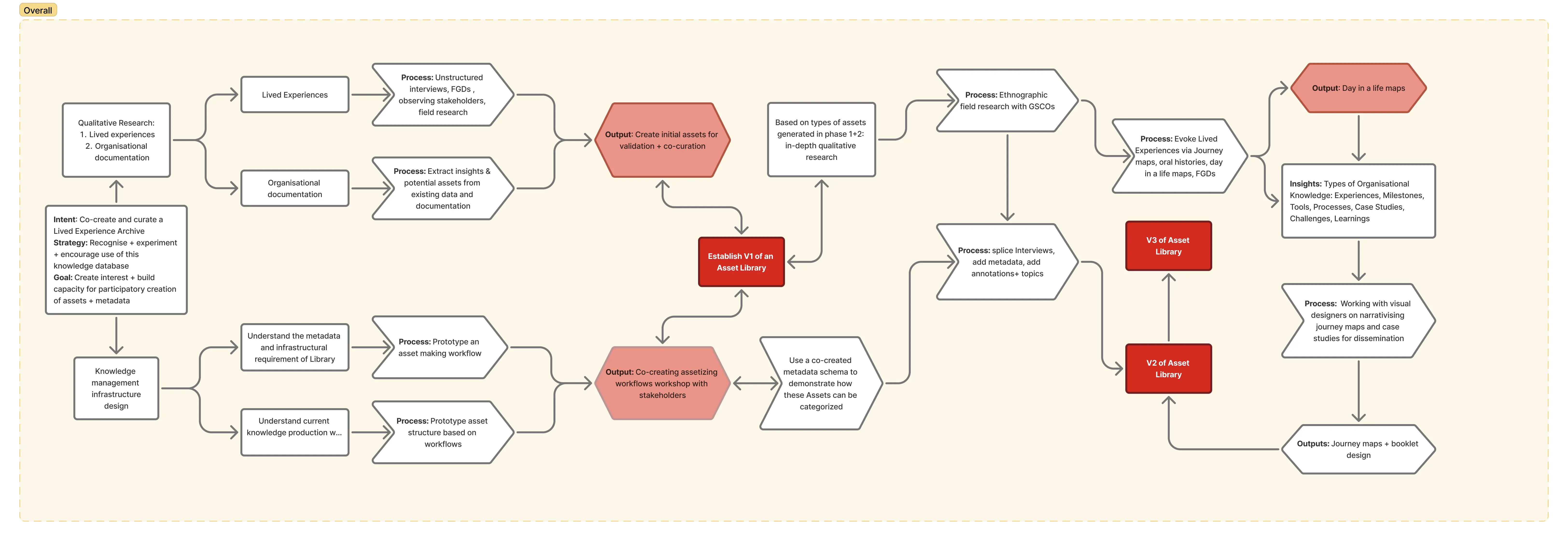
This work was done in 3 Phases
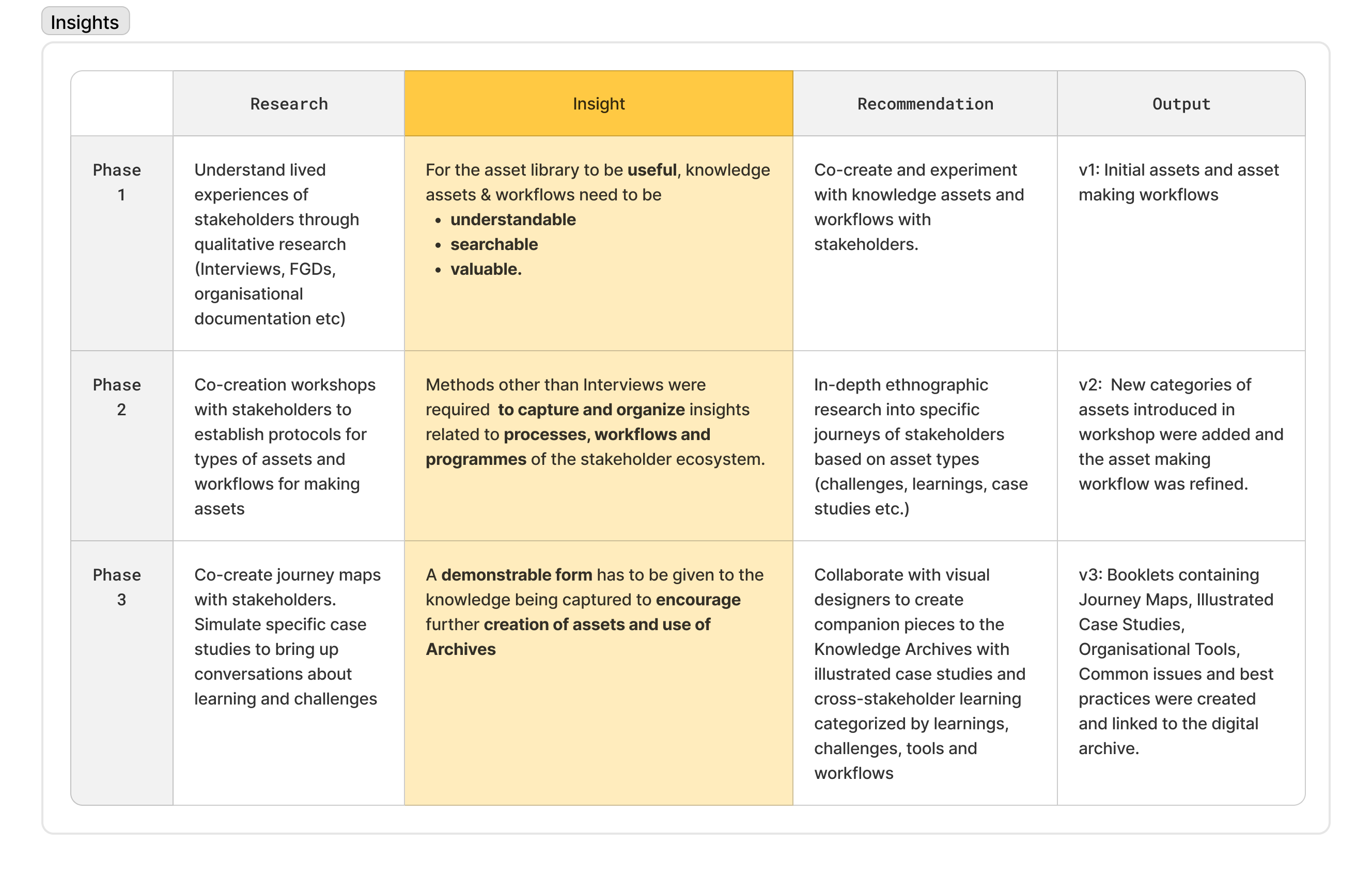
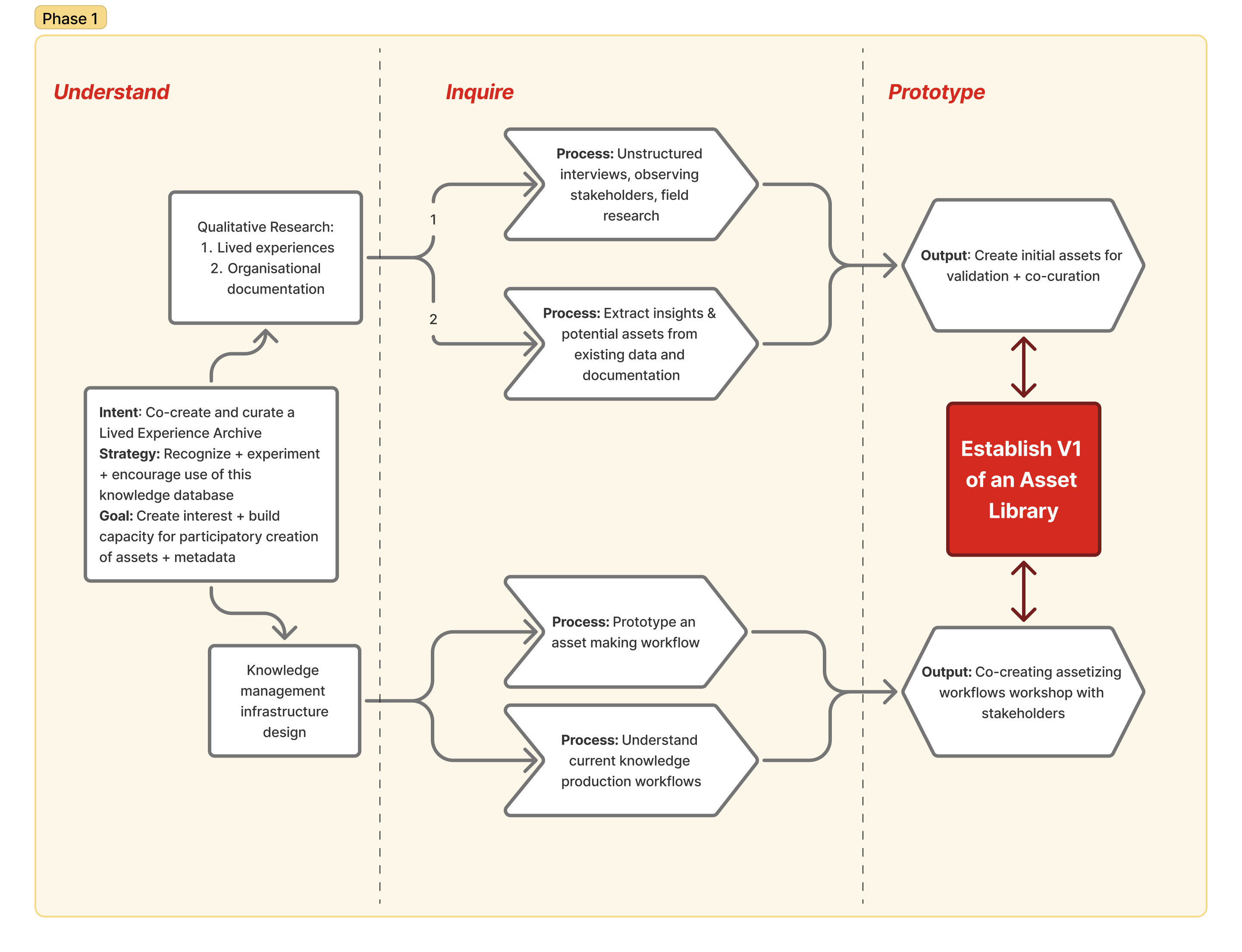
Phase 1: Understand and Prototype the Archive
To create this archive as well as make it useful we needed to understand the most interoperable way to set up collecting, curating and archiving workflows. To understand what kind of organisational knowledge is directly applicable to their day to day work
We started with unstructured discussions with the core team (RLM team and founder of Enable India) to familiarise ourselves with the current stores of knowledge.
Reading organisational documentation, reports, circulars and databases to acquire an in-depth understanding of the organisational structure, work practices and case studies of PwDs and enablers.
Phase 2: Workshopping the Archive
After the initial prototype, we decided to facilitate a workshop with the GSCOs for them for a few reasons.
- To test the assetizing workflow to see if it could be valuable enough for them in their daily work.
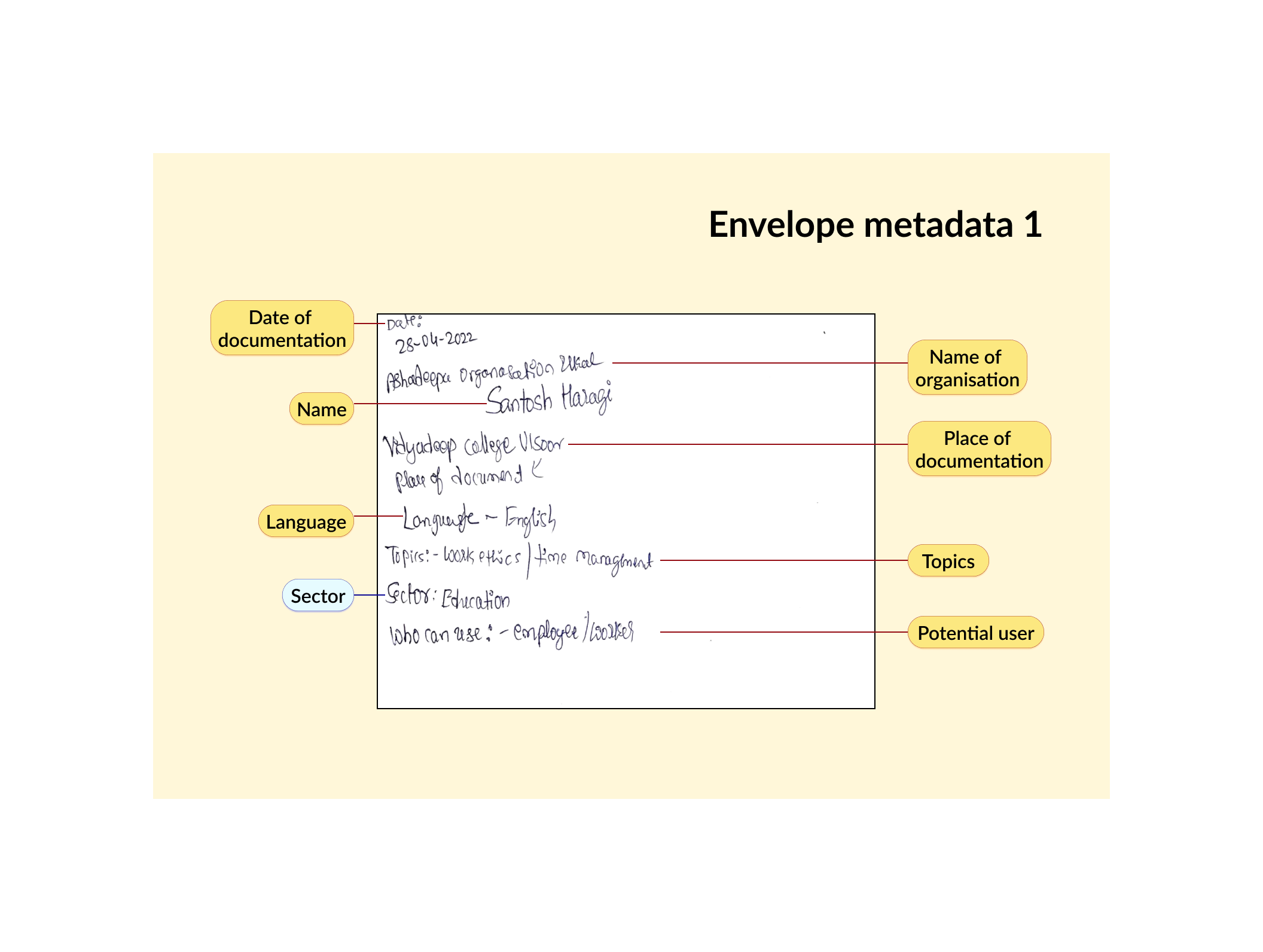
- To make some assets with their experiences and create some metadata that would be more intuitive for them to use later.
- To annotate and use each others’ assets to see if there was a possibility of the archive could be a co-learning space
The workshop gave us a few outputs and insights that led us to Phase 3. We received validated examples of lived experience-based knowledge assets and examples of a metadata schema that we could use for future assets. It also helped us set up future sessions with a few GSCOs to build more assets.
Phase 3: Populating the Archive
This phase was about us getting to know the journeys of GSCOs better and to record their experiences in various forms. We conducted oral history interviews, created journey maps, annotation exercises to form multiple types of knowledge assets.
Alongside this work, we also processed the journey maps and interviews we conducted. Slicing up audio fragments and populating the Notion Archive. The booklet was designed to be used in tandem with the archive. So we linked single assets with the single record in Notion through a QR code.
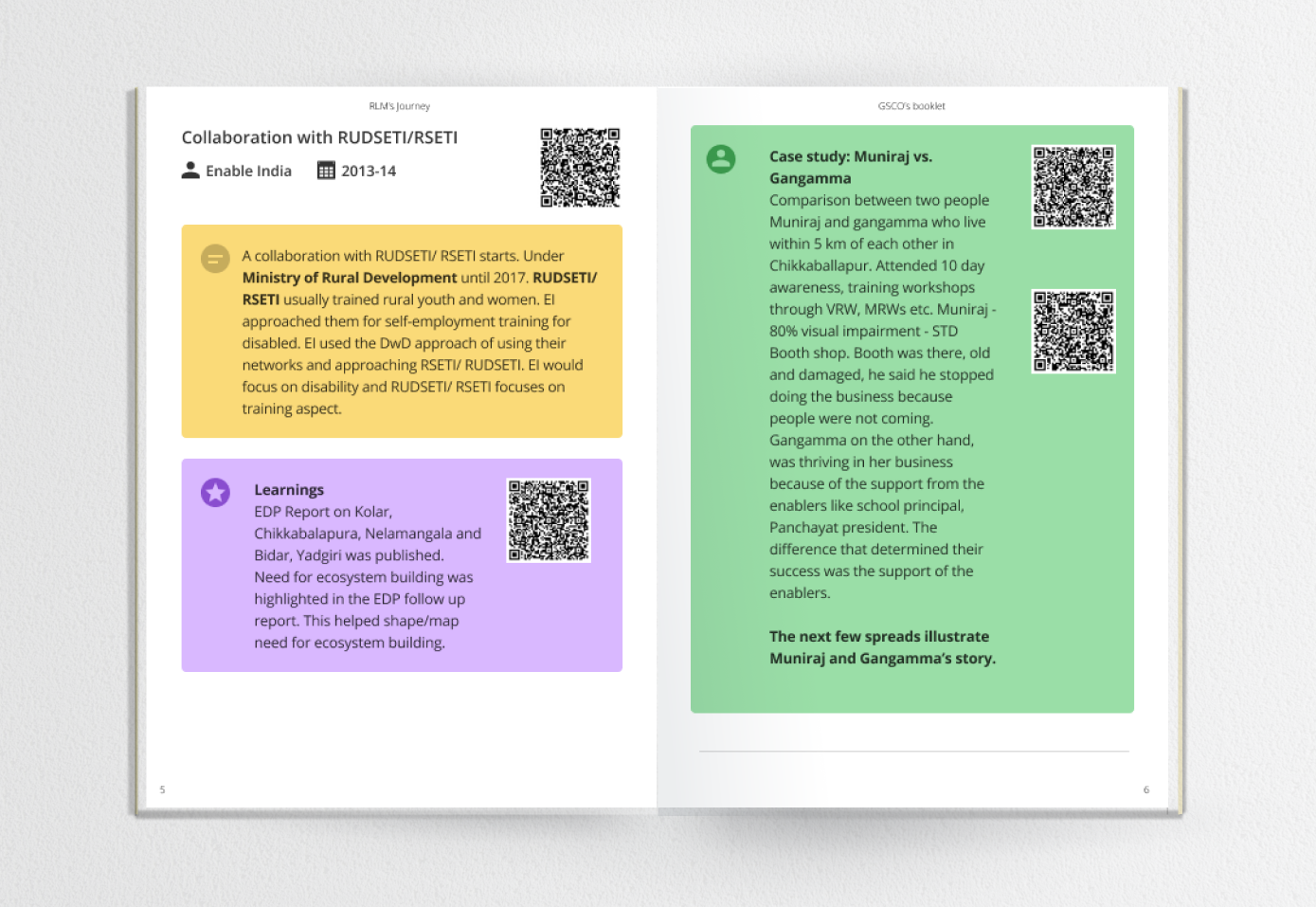
These typologies became more useful as we started thinking about publication and dissemination. We created the content for a series of booklets based on our prior qualitative research. During this time, we established a partnership with LadyFinger, a design firm to illustrate these booklets