See fully annotated map at Chickpet Field Visit - HCD Sem 7- Felt
The essence of our exploration lies beyond just human-centered design; it delves into the rich, often overlooked narratives of spaces where humans and non-humans converge.
These spaces, termed gathering-spaces, serve as focal points where diverse actors collaborate to shape the environment and its functions. Our aim is to uncover how humans interact within these spaces, how their gatherings are influenced by the space itself, and the collective forces at play.
The goal was to explore the process of learning from, existing within, and crafting within gathering spaces. We used metaphors from these environments to shape a practice focused on Human-Centered Design (HCD), building on earlier reflections on tweaking the education system. Students engaged in diverse activities such as site visits, mapping, reading, crafting, and collaborative work with peers.
The Brief
Adopt a method of learning to be, see and make in the spaces of gathering. Aim to understand the dynamics of human positioning within these environments. By employing auto-ethnographic design, immerse ourselves in these spaces, documenting what we perceive and what remains unseen. Through this process, we’ll unravel key questions:
Our focus will be on cultivating multiple practices of situated making, leveraging the inherent qualities of gathering-spaces to inform our creative endeavors.
By critically evaluating the metaphors extracted from these environments, we aim to enrich our design practice while contributing to a deeper understanding of our relationship with space and its constituents.
Process
- Observation- What can we learn from what we observe versus what we overlook in these spaces?
- Introspection- How do we exist within these environments, both present and absent?
- Reflection- As we engage in creative making, what insights do these spaces offer about ourselves and our design aspirations?
- Application- What metaphors can we derive from these spaces, and how do we assess their relevance within the broader context of design practice?
Vibes
Student Projects

Gathering Spaces - thetipsyartist.in
The formation of boundaries is an expression of the thought that lines do not affect the identity of the place as there are similar happenings across the lines. With the connection of boundaries with thread explains how they are connected, and yet not as the threads are coloured in different colours indicating the diversity, but by the end, it is white, explaining that every land is the same, and it depends on what colour one chooses to interact for a sense of the place.
Patchwork Pete - B•LORE by BIC - Atheeva
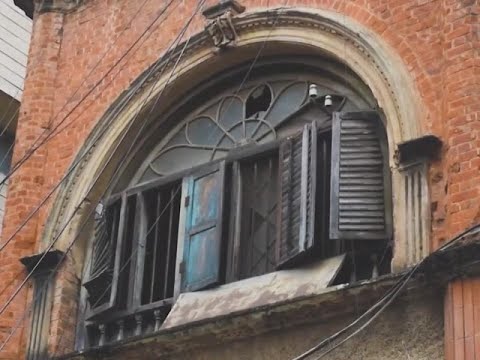
The city is a patchwork made up of diverse elements from varied origins, all sewn together to make a vibrant, messy and fascinating whole. This film explores the diversity of Chickpete, one of the city’s oldest neighbourhoods… the idea of walking as a way to get to know the city… through the crowded streets and the narrow lanes of the market… Once immersed in its flow, we sway to its dance, enraptured by its movement.
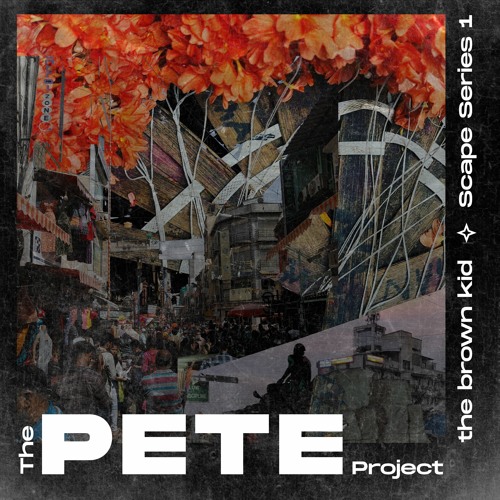
the brown kid - The Pete Project playlist
A collection of sounds from unique places in Pete, a marketplace and community in Bangalore arranged to create an expressive EP.

Pallavi Kiragi - Seeing, Doing, Being Design
It was exciting to venture into the known territory of a marketplace and discover a subject of interest that arose from chickepte, not from personal likes or dislikes. At the same time, it was frustrating to progress and collate insights and thoughts together because the visits would get redundant, and finding newer observations would be challenging. It was an eye opener to the central question of what kind of practitioner I see myself become in the future.

Single Screen Theatres - Sakshi Joshi
The projector acts as a tool to trigger memories of the single screen theatres among the people who have been visiting them. It helps in recalling the stories and experiences one might have and in turn it aids the documentation of a dying space. This artefact attempts to provides an entire experience of the theaters (in Chikpete). The panels have motifs… resembling the art deco style. The projector is manual which represents the bygone age of the old projectors. The reel has illustrations of the places I went to and the people I interacted with.

Field Research as an Introvert - Pronomika
In the world of UX design, primary research is a crucial step in creating user-centric experiences. As introverts, we may approach this task differently, but that doesn’t make our insights any less valuable. Embrace your introverted nature, play to your strengths, and remember that there’s more than one way to gather the user data you need.

The monkey that did everything on his own - Malay Vasa
The first step in working with others is trust. Doing everything on your own can be overwhelming, getting help makes it much easier.
Designing for Gathering Spaces is a course that moves beyond the confines of conventional Human-Centered Design (HCD)- and the counter-design critique of standard UX curricula- to consider the wider environment in which humans and non-human elements interact. It emphasizes on situated making and is taught in an interactive format involving active student engagement with diverse gathering spaces. An earlier project, Designers Ace, explored a complementary approach to fostering design thinking through a set of 101 prompt cards for budding designers. The course takes a broad view of gathering spaces, incorporating both physical locations such as parks, urban environments, and workplaces, as well as digital spaces and ecosystems. Its approach acknowledges the co-presence of human and non-human actors, encompassing technology, animals, and natural features, among others.
Modes of Engagement
- Reading and Annotating: Students gain understanding of various histories, current scenarios, and narratives.
- Mapping and Seeing: This mode involves discovering and mapping distinct perspectives across various dimensions.
- Participating and Being: Encourages students to understand and experience various roles within a space.
- Making and Bridging: Focuses on the creation of artifacts as a means of communication and collective thinking.
- Archiving and Exhibiting: Students create archival artifacts that capture their engagements.
- Participatory and Collaborative: Students participate in shared decision-making and actions.
- Co-creating and Co-learning: This mode involves collaborative creation of artifacts or knowledge.
Capabilities
- Speculate: Constructing from concepts in the face of complexity, risk and limited information.
- See & Connect: Uncovering and synthesizing diverse experiences and forms of knowledge.
- Be Honest: Being self-aware and transparent in expressing one’s position.
- Make: Creating new artifacts, things, and relationships as tools of critical inquiry.