Caring in Networks: Reflections on Archetypes and Axioms of Collaborative Practice
Originally published by Srishti Institute of Art, Design and Technology, 2020. Licensed under CC BY-NC-SA 4.0.
Acknowledgements
This project would not really have been possible without the whole village of support that I received. At every point in my project there were people that picked me up, gave new directions, compensated for my weaker phases and supported me. My parents and Merlyn have always been supportive despite Srishti being a huge risk to take and that is something I’ll always be grateful for. My support systems were many and amazing and I hope they will forgive me if I forget to mention someone. Paul, Naveen and Shreyas have always been the wind at my back, comforting me when things got overwhelming. They opened up so many different ways for me to articulate my thoughts. The breadth and depth of their knowledge is only matched by the volume of their compassion. In Bidar, Supriya, Dilip and Vinay took really good care of me and showed me my thesis in practice and showed me how persistence transforms a place. They will be my lifelong inspirations for this. Ruksana Ma’am was an encouragement to me in this sense as well. Her knowledge, compassion for the world and her view on things have changed many things in me. A large group of my peers and friends have been the safety net on which I have so often relied on. The writing group created and moderated by Thomson was immensely helpful in helping me vent when necessary. Veda, Nishita, Siddhant, Malini, Koumudi, Baishnabi,Thomson,Chandra, Shreya, Sweta, Mahima, Sanket have constantly helped me clarify my thoughts, given me support and helped me look at things from a different perspective and teaching me about why collectives have strength. Ayan, Preshit, Maria, Oindrilla, Subhashmita have helped me keep sane during the lockdown. David, Naveen, Mufteeb and Vishnu were constant companions in the last month of the race - keeping things from getting overwhelming and always being people I could rely on to shift my viewpoints. Even though we didn’t talk much about the project, Padmini was always a north star for the things I was describing. Ishita helped me out a lot by sharing her experiences of collectives and what she has lived and loved in them and discussing my ideas through her experiences. I owe a lot of these possibilities also to Rohini, who has looked after and nourished my mental health through these two years-she is a gem of a person. Also repeat shoutout to Paul and Shreyas.
Lots of strength and hope to you all.
Preface
The systemic nature of the issues we face has been revealed through the various breaks, in reality, we are seeing all around us. I experienced this from working in Wayanad with the budding network of research and design. During the studio, I studied how the socio-economic situation of the Paniya tribe was being reinforced through histories of oppression and ahistoric policies (Suchman 2018).
More and more we are realising that the non-linear nature of these issues and each factor feeds into other factors and create loops of reinforcement or depreciation. This also means that band-aid solutions often end up worsening the problem because of the interactions between the different factors and stakeholders in play. It also makes systemic issues much harder to see and much easier to dismiss the number of factors involved in each systemic issue and how densely interlinked they are.
Through a studio about future studies, I explored how the systems that surround us so ubiquitously are wrongly attributed to a positivist view of human civilisation. Our progress was never linear but plural. The systems that come into power and the mainstream are often chosen based on existing hegemonies and sometimes sheer luck and are seldom an indicator of quality. Rather they are an indicator of what metrics took importance to whom at what point of time. This leaves ghosts of systems that could’ve been and never realised. The presences and absences of alternative ways to make sense of the world affect the way bodies are structured or collectivised. Through a conscious effort to speculate about these ghosts, we try to surface alternate ways of do-ing and be-ing while also suggesting that ‘this’ isn’t the ‘natural’ way of things. The saying that a fish doesn’t know about the water till its outside is an apt metaphor for how much this ubiquitousness blinkers us. It is a clouding of vision in a temporal sense and restricts the way we see the past, present and the future.
Cally Gatehouse summarises this using the way that Jacques Derrida and Mark Fischer talk about the concept of Hauntology.
“Hauntology is a term coined by Jacques Derrida that ‘supplants its near-homonym ontology, replacing the priority of being and presence with the figure of the ghost as that which is neither present nor absent, neither dead nor alive.’. Cultural critic Mark Fisher has identified two hauntological patterns through which virtual entities come to act upon the present: the first is something that is no longer present, but still has an effect even after it is gone. This can manifest itself in a compulsion to repeat what has gone before. The second is something that is anticipated, but never manifested. This anticipation can also shape our behaviour, even if the thing anticipated is never realised. Speculation, as a practice that aims to generate previously unanticipated futures, could be understood as an attempt to reconfigure these patterns so that both futures and past might manifest themselves differently” (Gatehouse 2020)
Through the future studies studio, I explored the various socio-political alternatives that could have arisen in pre-independence India. Furthermore, how these alternatives would affect the technological realms that are in place in our country today. Our worlds are made of many human and technology linkages in every aspect of our life. I use technology as more than a modern digital electronic tool and more as a term encompassing made objects and the socio-material systems that guide them. However, like Lucy Suchman shows in her talk “Relocating Innovation: Places and Practices of Future Making”, the visions of these made objects are blinkered temporally by limiting the historicity of technology (Suchman 2018). These same ‘blinkerings’ apply to humans, their bodies, societies and the relations between these. The neoliberal capitalist view of the world as a linear progression or even a geometric progression like that Moore’s law(The Editors of Encyclopaedia Britannica 2020) is something that I hope to challenge at least in the slightest way.
In this paper, I aim to offer a glimpse of different epistemology for collaborative networks from the position of centring the various collectives that we belong to. Much has been said about care, but I hope to contextualise my experiences in the theories of care from medical anthropology, political actor-network theories, feminist geography and science and technology studies. Through this research, I hope to present a reimagination of hierarchical practices in networks, of typologies of collectives and institutional practices that are ‘new’. I present the different manifestations of care that I observed, embodied, built for and encountered in networks. I have, through my time at Srishti approached collaborations and networks and studied how they addressed whatever issues they were formed around.
Through a studio in Wayanad, I explored ways of helping tribal children speculate about futures with children from other castes as a way to destigmatize caste. The project was important for me to understand systemic perspectives and how issues play into each other. Another project in Bihar with early childhood care involved understanding the links between caste and spacio-linguistic access to education. In partnership with Project Potential, we were on field with youth from the district and were lucky enough to talk to them and have them talk to us about the research. Working with groundwater fluoridation in Chikkaballapur helped me understand the value of middlemen in the support and maintenance of the network. INREM and a network of people, practices and organisations were working to solve this. It was amazing to witness how much longevity matters to field engagement. As a part of my Transdisciplinary studio, I was exploring conflict and care across systems to answer existential questions that were close to me like “Can we actually hope that we can deal with Climate Change and all the conflicts that it will bring?”. Through the fieldwork for the capstone, I explored how collaborations and networks can work from practices of care and use conflict and care to deal with important issues. Through all of these experiences, I grew closer to the idea of redefining how we work within our collectives. How do we practice caring for the world through these collectives while also making sure that the collectives themselves were cared for? This involves a lot more work than caring for the individuals within the collective and often about understanding that care for the individual rarely has benefits for the collective. Annemarie Mol puts this succinctly, “care for collectives tinkers with the conditions in which they live” (Mol 2008, p. 68). Through the paper, I explore what this means for the everyday lives, the places of these collectives and their practices.
It was a struggle for me to describe and reflect on these practices as I was still learning through most of my capstone how I recognized and responded to these care practices. I intended to flesh out these slices through my capstone. However, I’d be remiss if I didn’t mention the various privileges that made it possible for me to do the research this way. I come from the privilege of living in a Tier 1 city; higher caste and middle class; neurotypical; able-bodied; cis-het male studying in a expensive design research institution. Also, the reason I was able to do this capstone is the access I had to travel and stay in a place with funds from home and focus on my work most of the time. There was also the privilege of being the practitioner and the respect and access I received through the role.
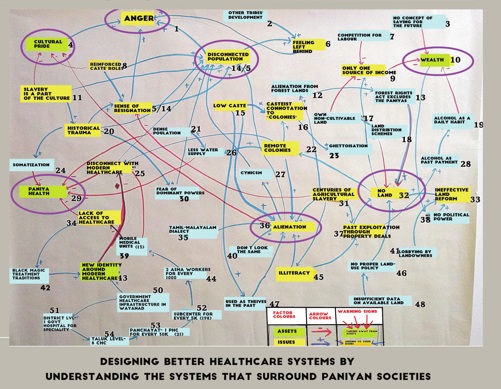
Fig 1: A causal loop diagram of my Wayanad Research - The Disenfranchisement of Paniyas in Kerala
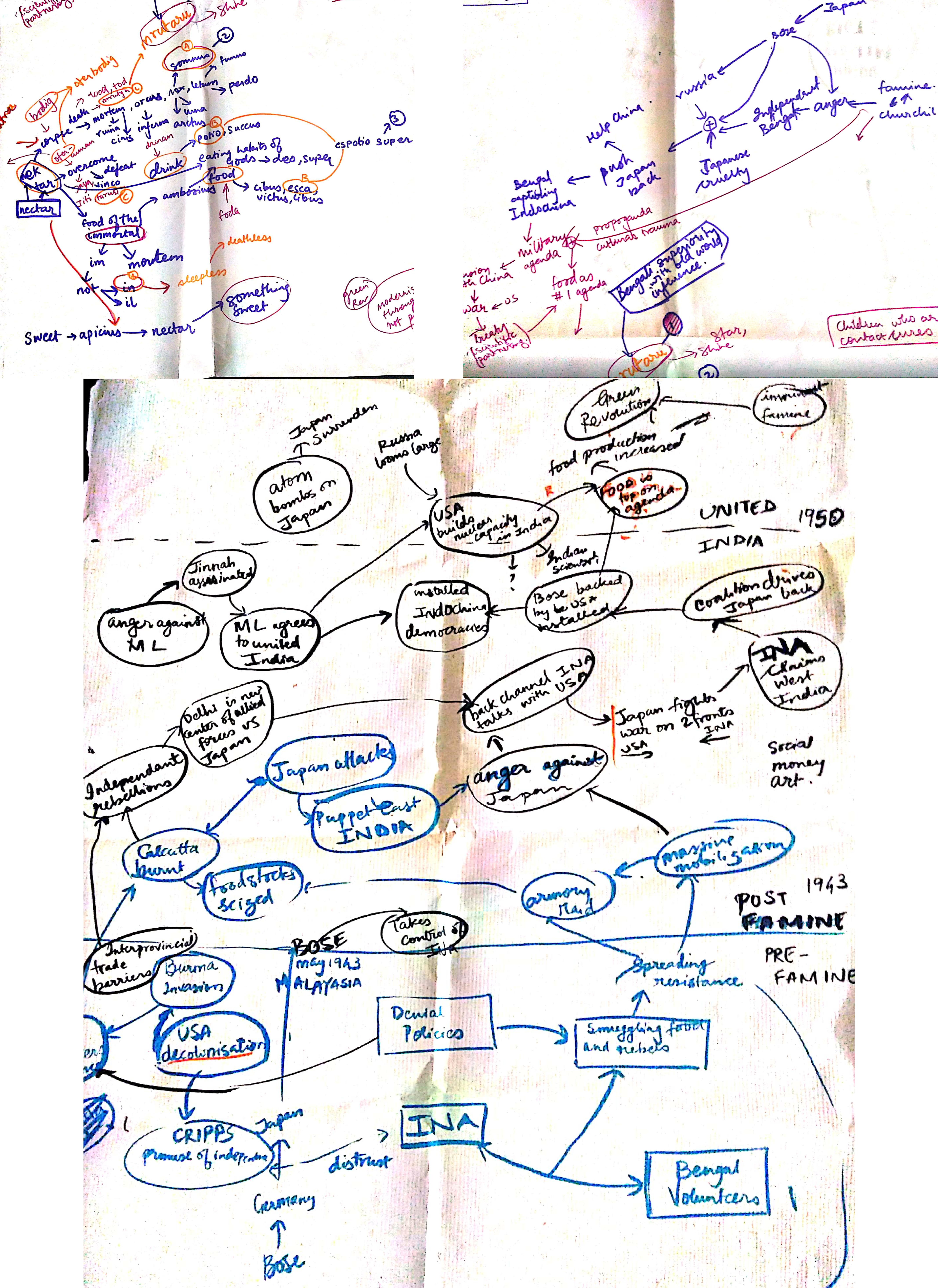
Fig 2: From the Mapping Futures StudioEcological System: Drawing Inspiration from Ants
Methodology and Representation of Research
It is precisely the fact that our vision of the world is a vision from somewhere – that it is inextricably based in an embodied, and therefore partial, perspective – which makes us personally responsible for it. The only possible route to objectivity on this view is through collective knowledge of the specific locations of our respective visions.(Suchman 2002)
I wanted to do the capstone not as a single thesis or problem-solution but rather as an object produced from participation and collaboration which in turn produces multiple smaller outcomes, outputs, practices and reflections. The aim was for me to be able to first understand how care manifests in networks, frame my learnings on care through the outcomes, outputs, practices and reflection. As I reflected on how I wanted to represent my learnings, I came to using multiple descriptive tools such as archetypal roles of care practitioners in networks and other practices of these care practitioners that weren’t big/small enough for those archetypes. Through this capstone, I hoped to rehearse a practice I wanted to develop for myself, one that moved in between academia, activism, technology and design that is heavily centred in responsive human-nonhuman networks.
I imagine, retrospectively that there are two ways that I envision my participation in these networks-through being and through doing. By be-ing in a network, I wanted to see the network as not separate from me. This would have been a defeat if my engagement remained within the scope of my capstone or my “research question”. Care as a general inquiry helped me build an inductive experience of the network not by forcing my agenda but by involving myself with the activities of the networks themselves. The post-COVID part of my capstone served as an illustration of that to me. I was, first, part of those networks and be-ing in them and only then did it occur to me to include the work in my capstone.
“Rather than occupying the two positions simultaneously all of the time, what happens is more akin to an oscillation between observation and participation.” (Bondi 2003)
The second aspect of the participation involved do-ing things in the network. These could include making with, for and of these networks. These constantly helped me frame the differences in the contexts and practices of these networks and also helped me draw shapes around the things that united them in my inquiry, care. By making artefacts that served the role of shaping, supporting and aiding the work of the network, I was able to understand my thoughts about care and articulate them through the work. Often, this process of do-ing was interrupted by the capabilities of the tool and the tooler. Finding different ways of doing those things also gave me insights on how tooling and meta-tooling- their appropriation and sculpting-is a legitimate care practice that doesn’t receive its due. This is, in Lucy Suchman’s view an effect of the binaries of designer and user and the resulting centring of power and visibility on the designer’s side. This is despite the amount of work it takes to articulate and appropriate the tools for whatever specific work it is needed for. (Suchman 2002)
I draw from the theories of feminist geography to inform my research methodology. This methodology’s self-criticality and reflexivity refine both the way I conducted my research and what emerged from it. Another principle is to make visible the presence and absence of bodies, histories, knowledges and practices in a geographical setting (Thien 2009). Through this process, I engaged with ideas of care - in the forms they exist in-unique to the communities, networks, technologies and individuals that I work with. The question I got to ask in the end was “How do you re/imagine different modes of collaborative networks that take care of their communities and their value systems?”. This ‘how’ was important to me. I wanted to make sure that this knowledge production emerged through intersubjective and very relational dynamics which involved more than mere objectivity but rather an overt acknowledgement of the emotional content of the research(ibid). It was also my intention, in the spirit of participation to research through learning as a method.
As much as the scope of the research goes, I want to emphasize on the specificity of the research, and how if the same participation was undertaken with another set of networks then my descriptions of care would change. However, I would like to outline the processes of research like this, which could be adapted and used according to context.
Juxtaposition is a method I am borrowing from Jenna Grant to translate between concepts of care and practice of care in networks of collaboration. I want to juxtapose my anecdotes, experiences and made objects on the field with how care has been theorised in politics, medical anthropology, STS and feminist geographies. Juxtaposition offers the opportunity of talking and thinking about “difference without the subordination of one in terms of the other” (Grant 2020, p. 22) Also for my purposes, it brings forward the specificity of this research and negates any claim to objectivity and talks about the intersubjectivity of this research.
I also struggled with getting together a coherent representation of the anecdotes, metaphors, embodied intuitions, epiphanies that I gathered as well as the understandings I gained through the making of artefacts and micro-practices. I was somewhat inspired by the roles that Deepa Iyer envisioned in a social change ecosystem for the Solidarity Is and Building Movement project (Iyer 2019). I bring together a synthesis of these experiences in the form of archetypal roles that care practitioners play in a network. Other than that, I describe other axioms of care that I saw in these networks. Hopefully, the archetypes and axioms serve to partially illustrate my learnings through the capstone.
The decision to structure my paper in this way was a conscious one taking into consideration the non-linear nature of the work. By not isolating aspects of the work in distinct chapters, I use the current structure to move between binaries like theory and practice, designed artefacts and reflections, methodologies and personal connections to the research. Another decision was to use micro-outputs by defining outputs as any “do-ings, be-ings or make-ings” that helped me understand care in networks. Keeping this collection of outputs as the cornerstone of the description of axioms and archetypes, I present a glimpse of how I was witness to care practices.
The preface of this paper introduces systems-networks as I have come to understand through my practice in Srishti and speculates how futures thinking can help us imagine new paradigms of collaboration. The first chapter is an articulation of my intent and how that reflected in the work that I did in terms of research, making and theorising. The second chapter describes briefly my experiences and my work with the various networks. Thirdly, I describe how I reflected on theories of Actor-Network and political care through the structures and shared value systems of the networks. In the next chapter, I present some of the doings and beings I used to reflect on and understand the nature of care in collaboratives. I do this in three ways:
- Micro-understandings contain experiences which served as epiphanies
- Micro-practices contain understandings that I was able to gain through putting some things into practice or while rehearsing a practice
- Micro-makings consist of artefacts made or retooled for a purpose and what they taught me through the process
The fifth chapter uses descriptive tools like archetypes and axioms to articulate how I see care work in networks and talk about shared value systems. I do this in two parts. Archetypes which describe how there are roles of care practitioners that members may slip into when performing care work. These roles aren’t used as normative notions but rather a tool to describe care work in networks. The second descriptive tool that I use are axioms of care work in these networks. It is a convergence of the shared values that networks like these espouse. I go about the description by interspersing anecdotes and reflections with different theories.
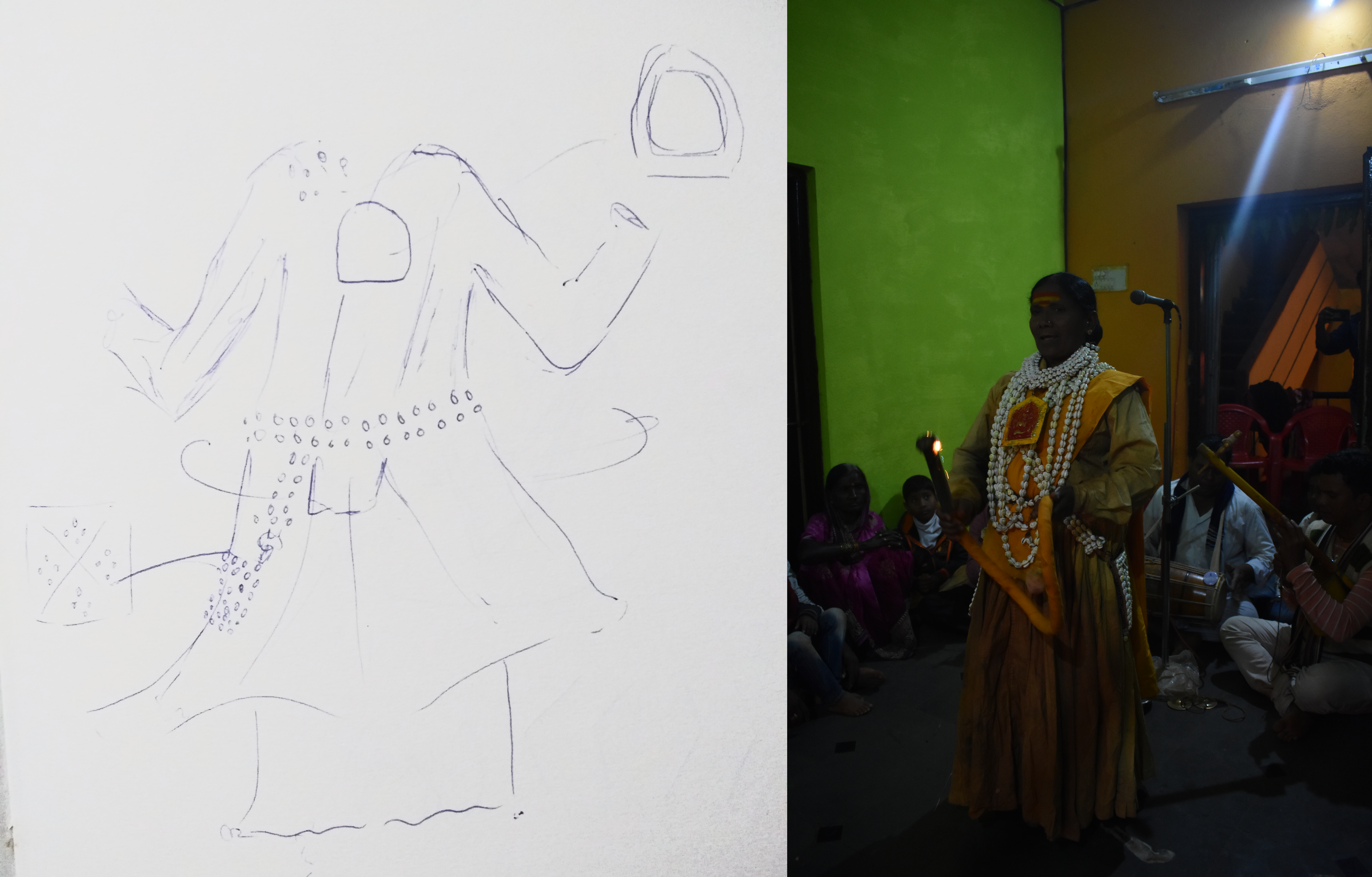
Fig 3: From the Gondhal we attended. credits: Anu AP, Anushtha Sharma
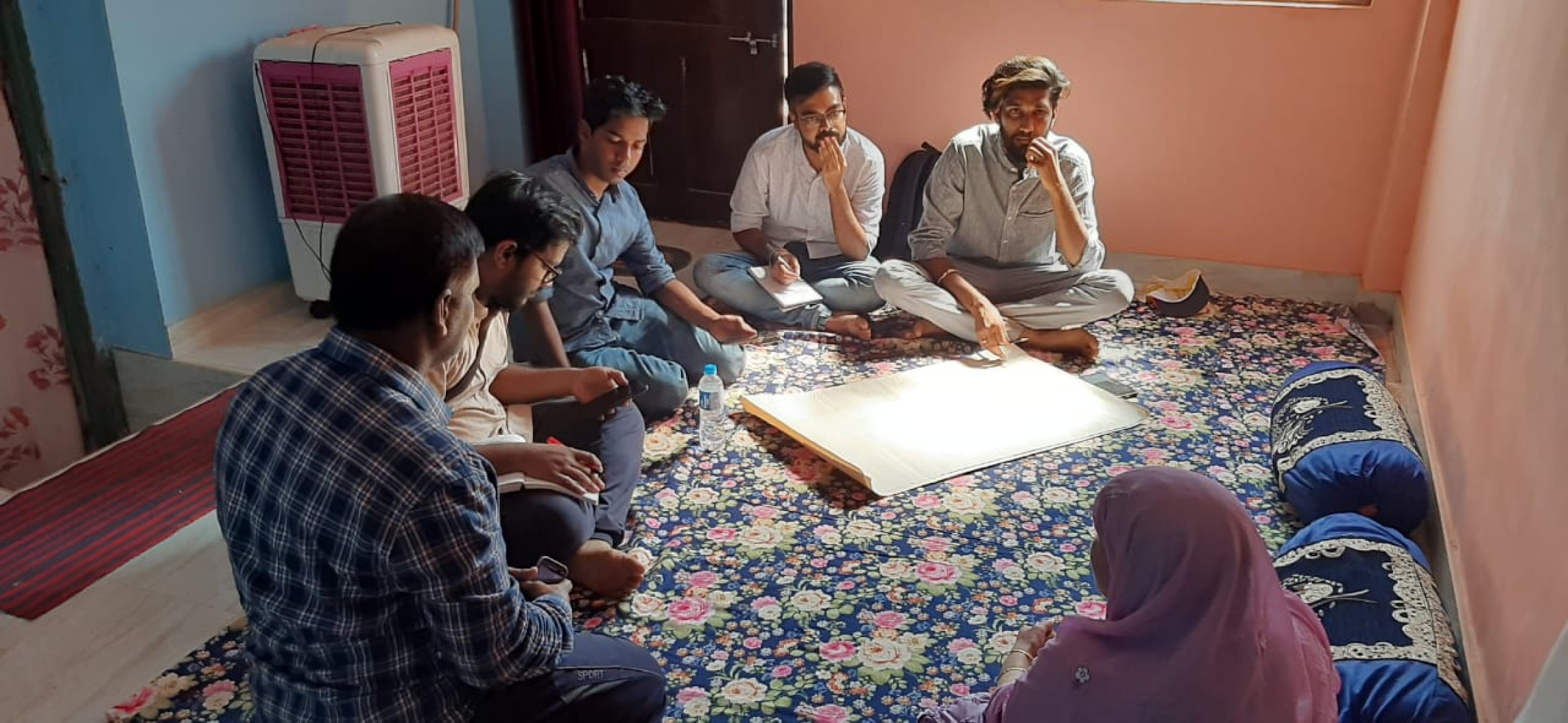
Fig 4: With Ruksana Ma’am and her husband. Credits: Dilip Patil
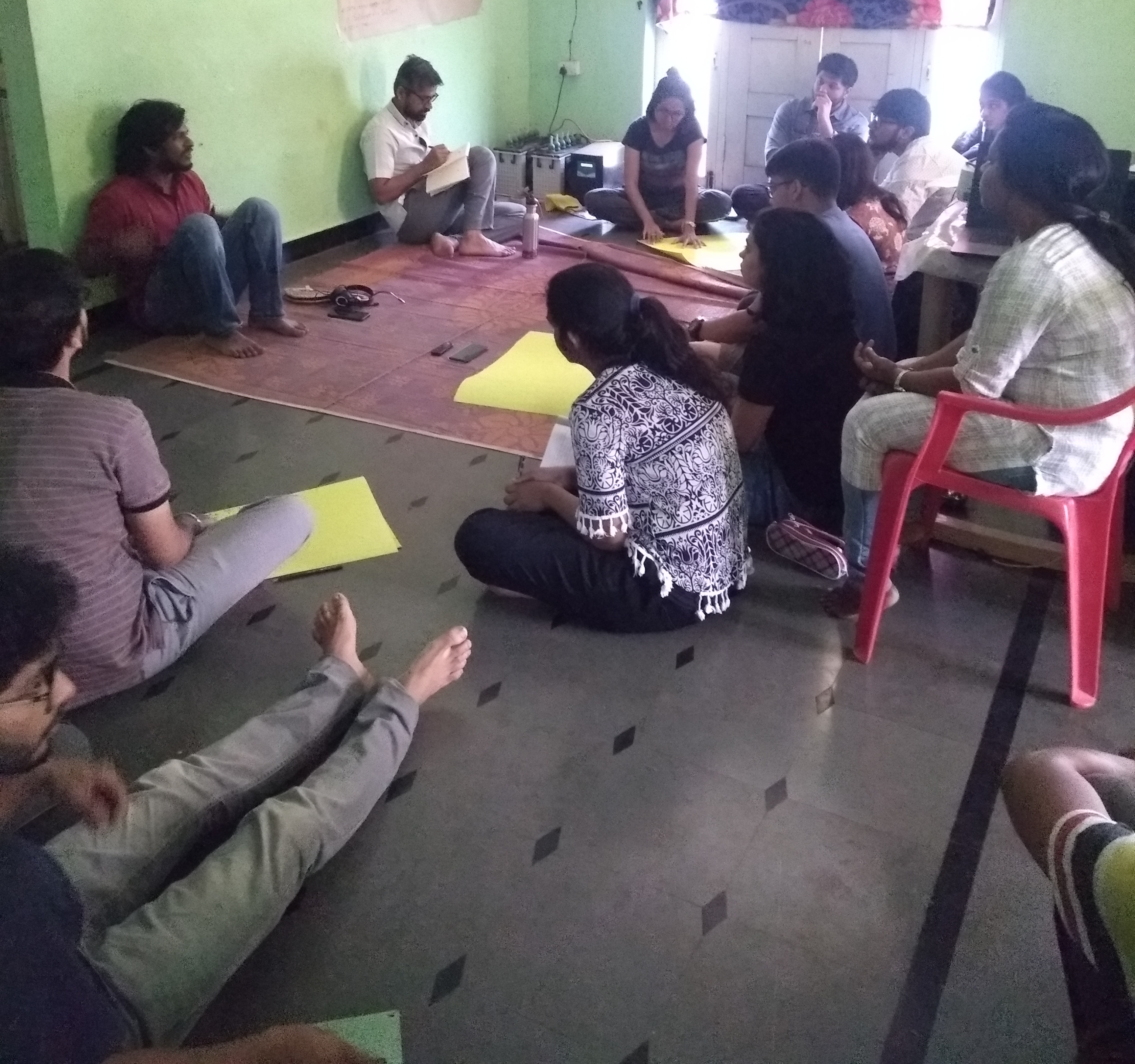
Fig 5: From Naveen’s workshop
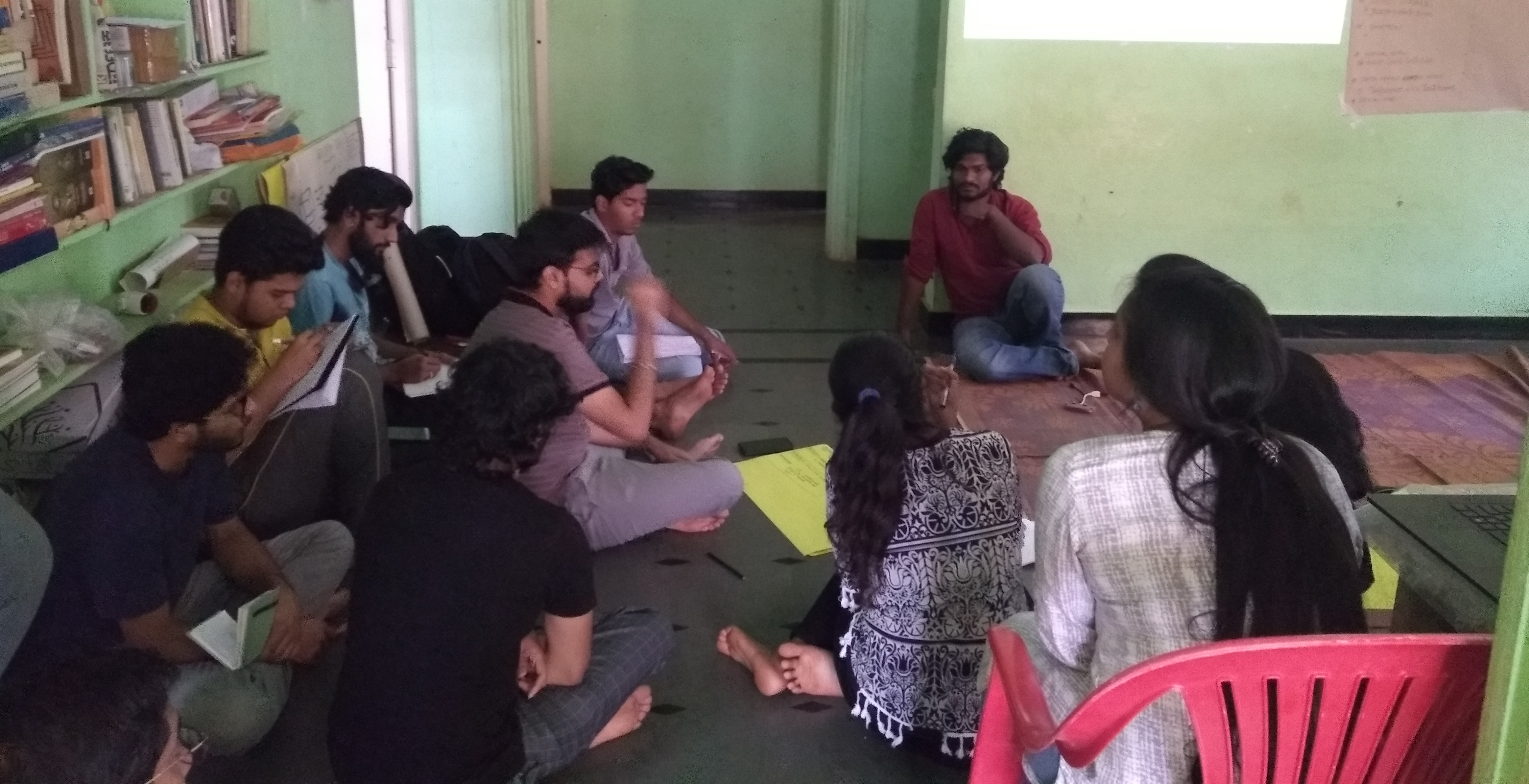
Fig 6: From Naveen’s workshop Credit: Vinay Malge
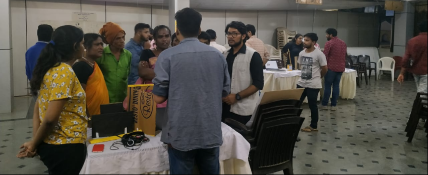
Fig 7: From the exhibition Credits: Vinay Malge
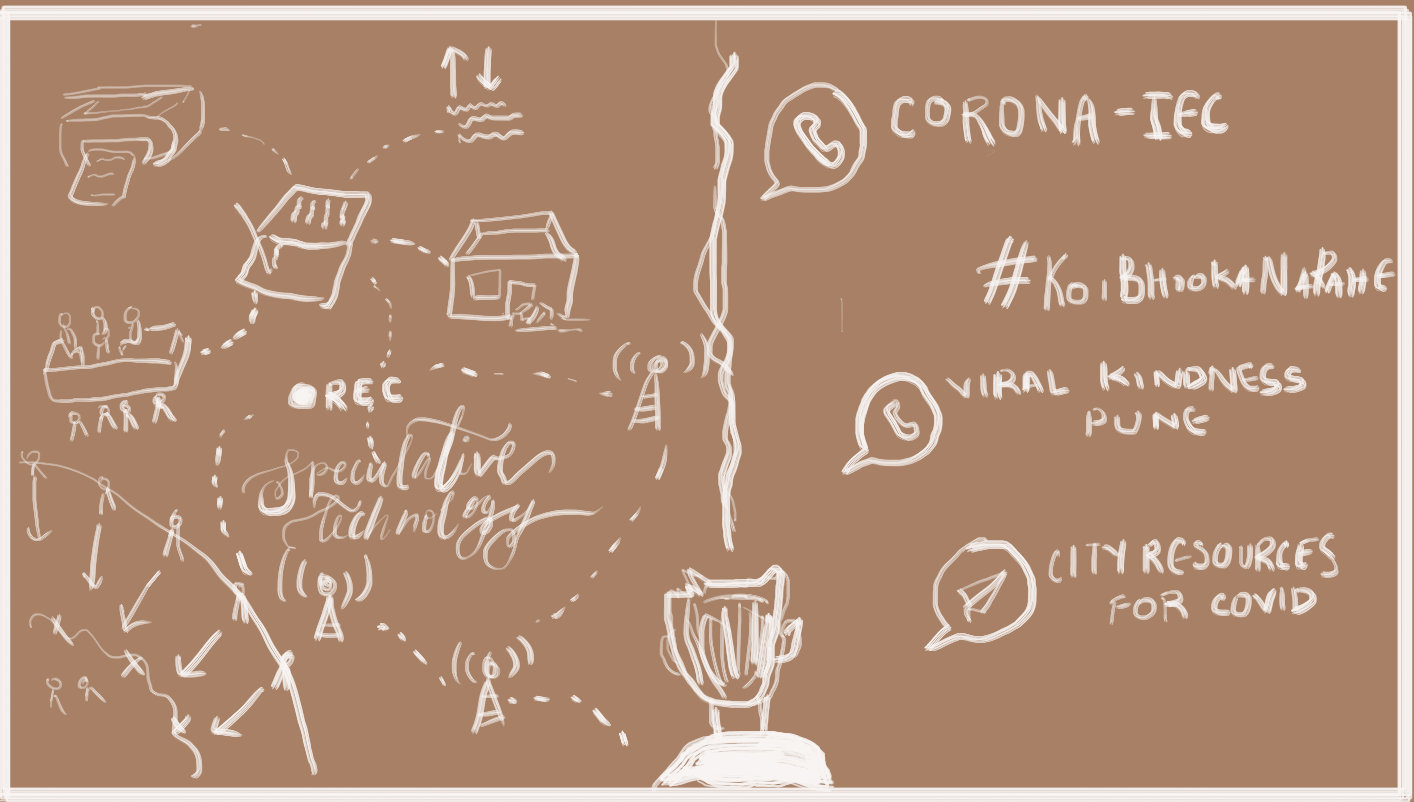
Fig 8: An old visualisation of my research
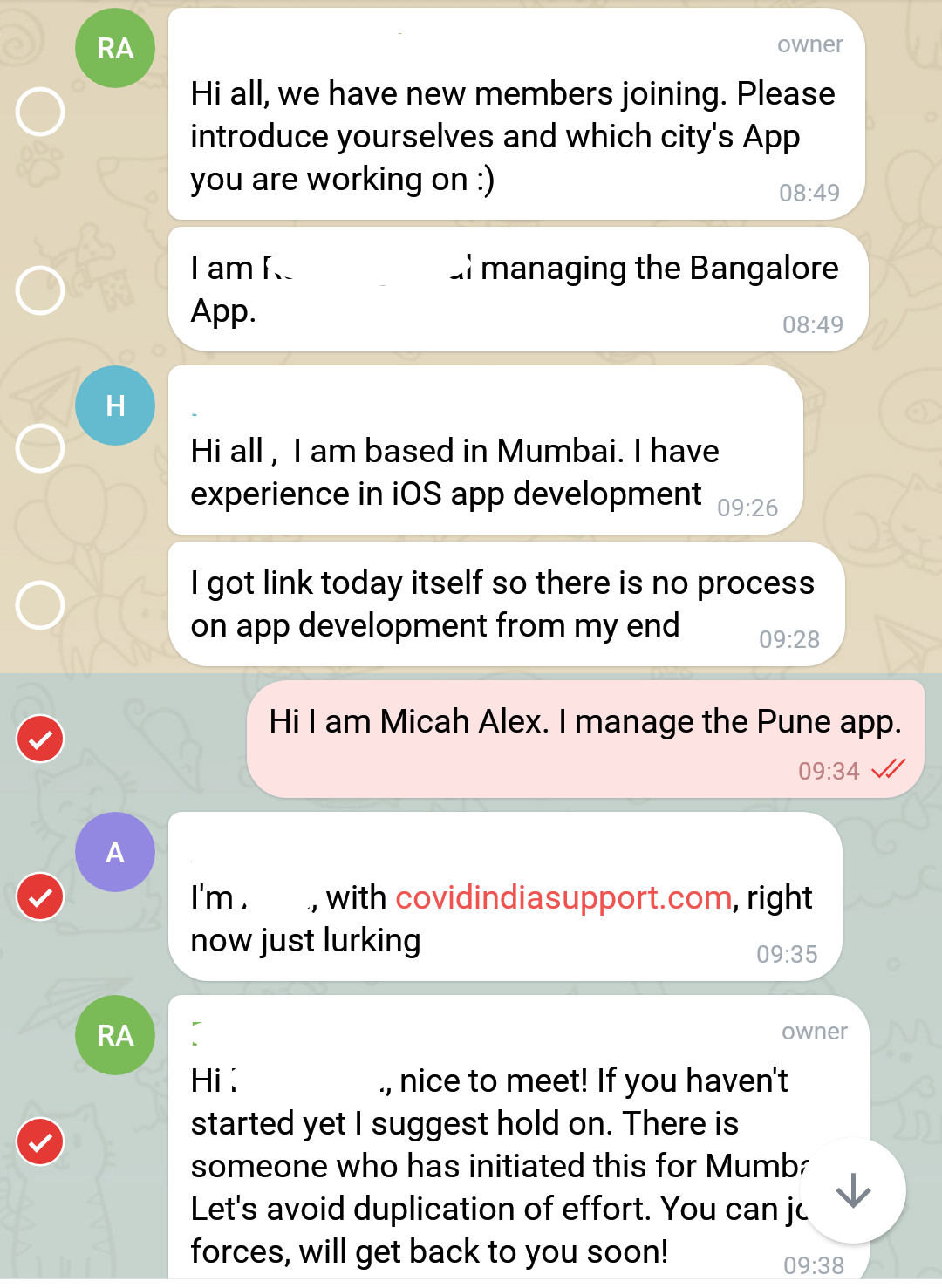
Fig 9: The first messages in the ICAN
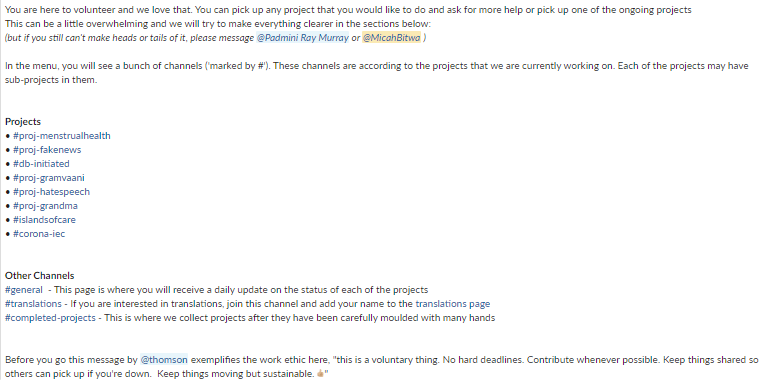
Fig 10: The welcome message in DB
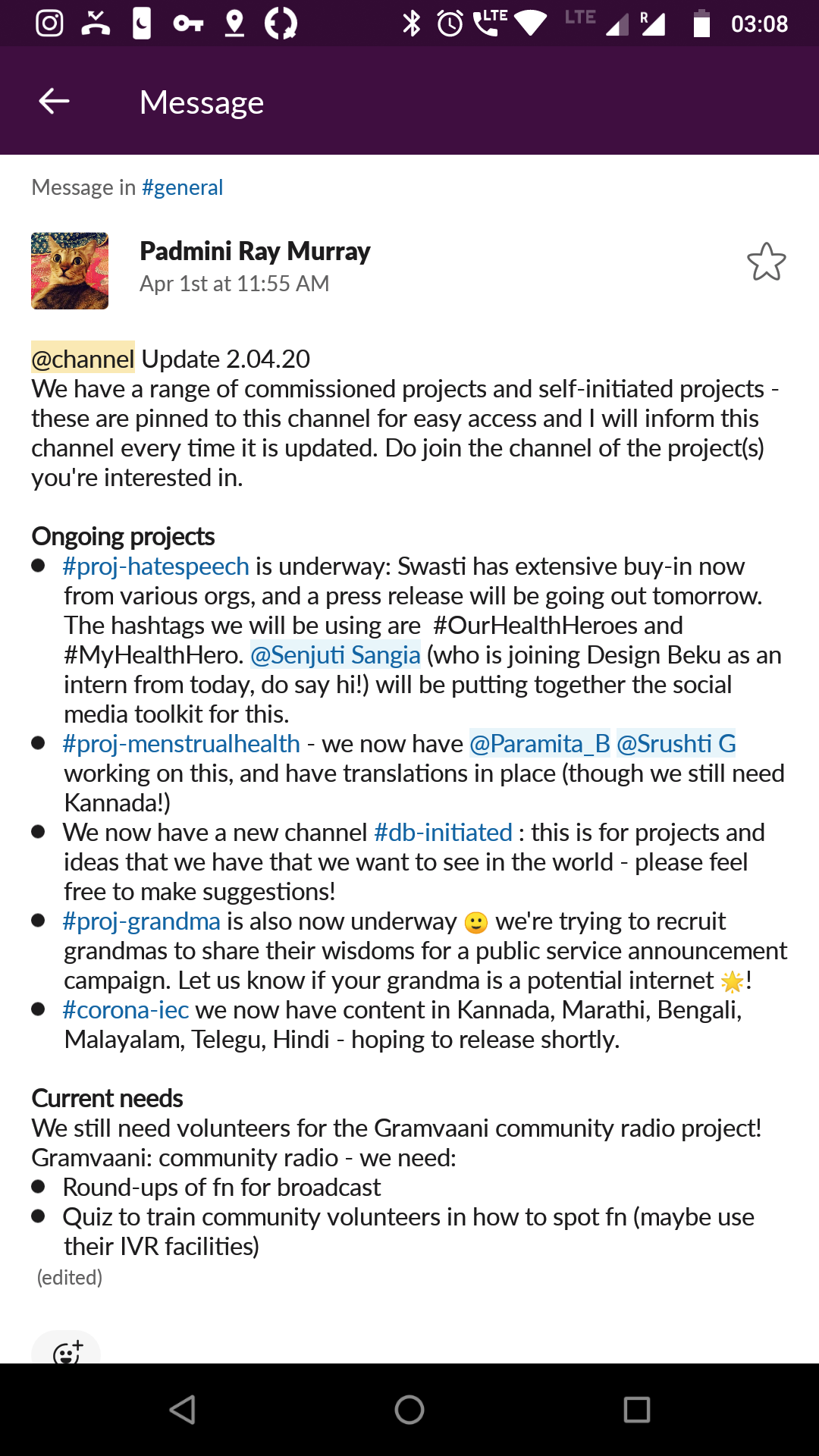
Fig 11: An update from Padmini on the Beku Group
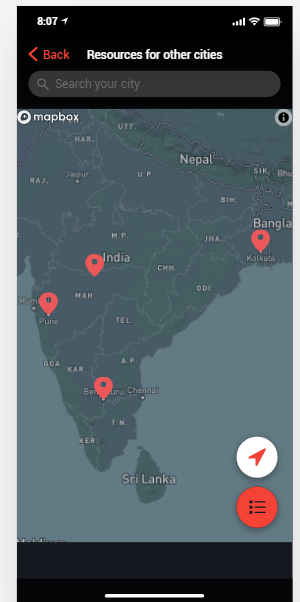
Fig 12: The apps made in other cities
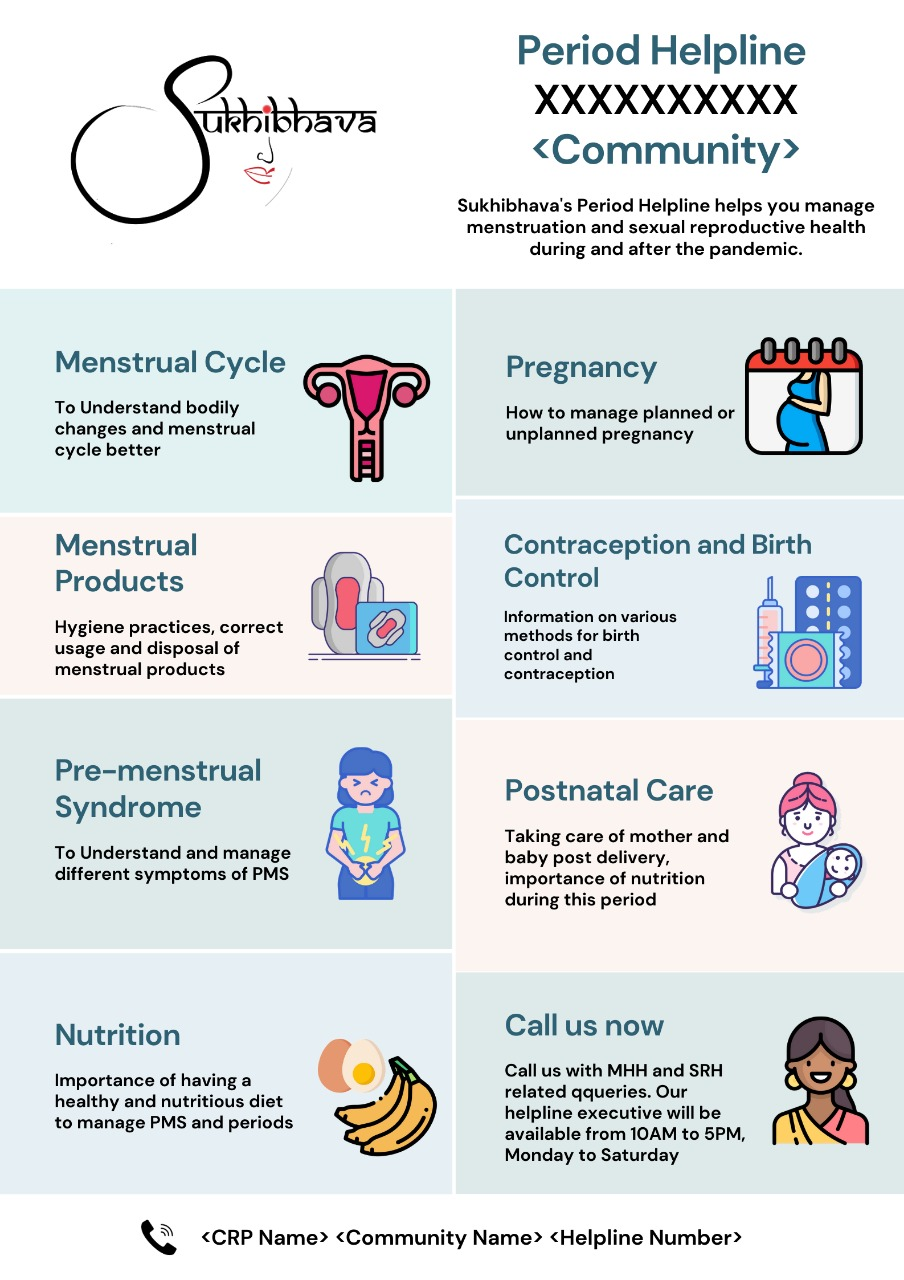
Fig 13: I helped the Sukhibhava team make this poster which was then translated
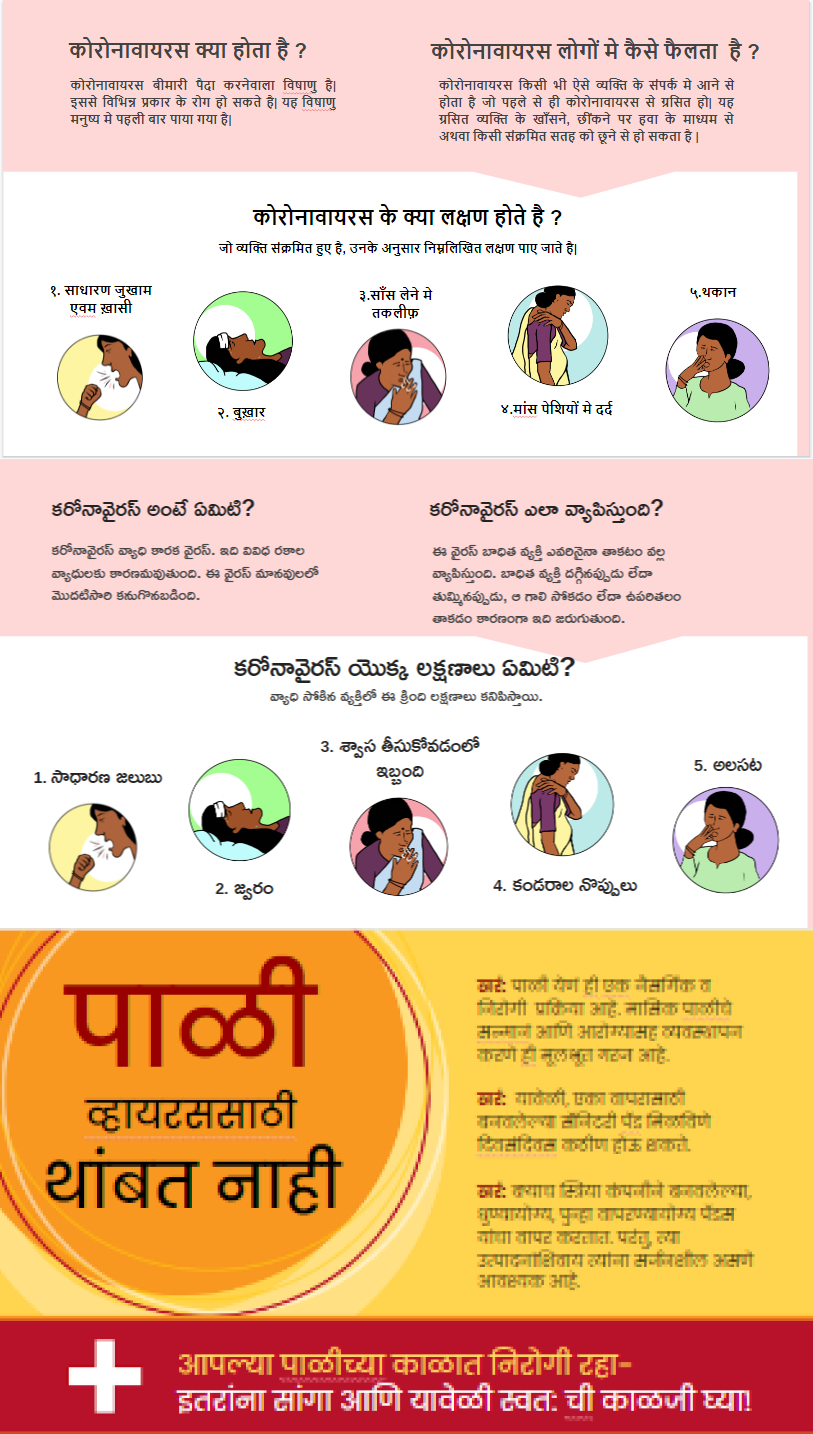
Fig 14: Translated versions of the same IEC material all done by different volunteers
Fig 15: Translated to Marathi by me and Saili
Understanding how networks come together
“We can refuse to miss what we are deemed to be missing. We can share a refusal.” (Ahmed 2017, p. 185)
Care as a concept was only familiar to me as being vaguely socio-spiritual. Shreyas suggested that I look at theories of ethics in practice in feminist geographies and through Naveen, I found Annemarie Mol and Lucy Suchman who talk about care in the contexts of medical anthropology and science and technology studies. It started to become clear to me the kind of literature I would read from that point on as I started to look at care in different contexts to recognize it in networks and maybe elaborate about a theory of care in collaborative places. Annemarie Mol’s Logic of care underlined a few very important things for the course of this research. Annemarie Mol asks the question of whether we are individuals or collectives first. She talks about how we are not singular entities and argues the case for adding temporal relations in the associative identity of a human. By putting out missives to individuals to encourage them to keep up healthy practices, it is assumed that the health of the collective will also increase. Collectives are not made by adding together its individuals and much like emergence in systems practice. The actions, responses and reactions of collectives are non-linear to those of the individuals that it consists of. The two ways that she uses to elaborate on this idea is through categorisation and specification. How certain categorisations stick but are not the options that take the best care of the collectives and how a generalisation of care practices only alienate people, as they are now demonstrably deviant to the norm. Thus, care must be specific. (Mol 2008)
Through this project, I hope to present categorisations of people in networks not as individuals with a function but through their practice of care. This may be a smaller part of a larger reimagination of how networks situate themselves. It also may offer insight into how these different networks were organized around something. It would either be a shared value system, a response to an emerging event or matter of concern or both.
An worldly thing may fill in as a mutual object of concern for a specific collective. It is consistently a contested item, that also creates a bond among them. Something that cleaves as well as unites. This is not to say that it is not something that takes away commonality but rather defines something as a different type of common like a match on a football field. A political matter that is common through the process of people connecting because of it but also articulating distinctions within and without themselves through the “thing”. Ella Myers talks about how a ’thing’ or a ‘matter of concern’ happens before the emergence of ‘publics’ and ‘solidarities’ between them. Through these contest and alliances, she dismisses the idea of an all-inclusive ‘we’ in this emergence of a collective. (Myers 2013)
Latour also talks about how anthro-techno and natural assemblages start to coagulate around a “matter of concern” and not a “matter of fact”. This ’thing’ is about the shared care of the world that is much larger than care for the self and care for loved ones and others (Latour & Weibel 2005). It is a care that transcends the personal and the intimate and moves beyond that as a shared articulation of concern for something present in the world. The public coagulates around this thing in various forms of solidarity. These solidarities take the form of “alliances and contests”. (Suchman 2002)
Vinay when talking about the beginning of Team YUVAA told me that the network was activated when they decided to clean up the monuments in Bidar. The monuments thus became a part of the assemblage that is Team YUVAA. This was evidenced by their continued engagement with the geographies of Bidar, its various ecologies, dying practices and other micro-contexts. It was in the vein of this same compassion for the place that Shreyas and Vinay started working together. Their style of working heavily centred these shared values as drivers of action. There are so many times that I was a little confused by the melding and ‘unmelding’ of the identities of DLL, Team YUVAA, their partner organisations and their academic engagements. This was amply demonstrated during the Bidar civil society response to Coronavirus. The groups were heterogeneous in their constitution and didn’t have any name other than “CoronaSainikaru” which was given to them by the people. This soon changed to “Koi Bhooka Na Rahe”. Vinay always jokes to Shreyas about how the names don’t matter but the work does. ICAN was a chance for me to see how a network coagulated around individual intentions to respond to the crisis. However, in retrospect, the scale at which Ruchi chose to work, inside a city and with quick making tools, had an effect of articulating the values that would be shared later-Small, local, contextual, low barrier to replication and quick making. It was unfortunate that I couldn’t work anymore after a point and the group also disengaged from each other. The Telegram group, the Google Sheets, the Glideapps-by their very collaborative nature hosted a bunch of different people and conversations. Many of them flitting in and out of conversations, some hidden, some over a long period.
Another way that I saw the coagulation of these networks were through the latent and invisible processes that came before them. Design Beku is the brainchild of Padmini, Shreyas, Naveen and Paul who wanted to recontextualise design to more than the IT sector. I had attended a workshop in 2019 that Beku had conducted with trans-persons from across Karnataka post the 377 judgement. It was an effort with Sangama, an organisation that works for trans livelihoods and dignity. It was a time where Beku was still finding its place and pace. When coronavirus hit, they saw a reason to activate the network and invite more people to join them. Even with Team YUVAA, Vinay told me about how he had scoped Bidar for over two years looking for individuals who wanted to do something(“kuch karna he”) for Bidar. “One day we just decided to start cleaning the areas around monuments because they were really dirty. And from then on, the group kept working in more and more places with real issues that needed to be worked on. That whole process built up a lot of goodwill.” This also laid the groundwork for DLL to emerge even though Team YUVAA had very few members left in Bidar. Shreyas and Vinay started working together by chance and decided to team up and give a new direction to their efforts.
Each of the networks has had so many human and nonhuman members, participants and actants. In Bidar, through Naveen’s workshop, the networks we interacted with were mostly activated by the recording done on the Pi Zero. The nature of the RPi allowed us to do certain things while forbidding others. It allowed us to bring the sense of novelty to the activities while still having to be able to persuade the other network actants to use the device. Design Beku was a true assemblage of human, nonhuman, digital and non-digital, visible and invisible. The tools that made it possible to continuously collaborate allowed us more time to keep posting and putting out stuff even though the time that each volunteer could spare was quite less. The tools also needed to be interoperable. The ICAN became possible to put in app form only because something like Glideapps existed. The modular, sheet-based structure allowed for non-technical persons like me to start compilation on my own.
By “anthro-techno and natural”, I am also trying to describe assemblages and networks the way that Myers and Latour talk about their makeup. Anthro stands for humans and their pace in these systems and Techno as a broader term going back to the concept of ‘Techne’ 1. Natural systems, organic and inorganic also feature as part of these assemblages. Latour speaks about these constituents of these assemblages having a distributed agency in the whole process. He posited that it might be beneficial for humans to see that they aren’t the only ones with agency in these assemblages. They posited that effects were generated by an assemblage of organic and inorganic factors and humans cannot claim a monopoly on world-building. This diffusion of agency could lead to more conscientious care for the world(Myers 2013; Latour & Weibel 2005).
Techne as the belief systems that guide systems of making, made objects and the belief systems behind them. https://plato.stanford.edu/entries/episteme-techne/
However, Myers argues that this denies the amplified world-building capabilities that humans have in their respective sites. She stands against the flat-out distribution of agency that Latour and Bennett talk about in their network theories and instead argues that each actant in a network or assemblage is not the same in terms of the capacity for world-building. There are many things that she borrows from Latour and Bennet’s description of assemblages in terms of the fallibility, non-sovereignty and the blindness of human actors in these sites. However, she rejects the notion of levelling the agency among each of the actants in an assemblage. Human agency has the most effect on the assemblages of organic and inorganic. She talks about assemblages as not just actants that may be organic and inorganic, she talks about “worldly things” surfacing assemblages that are defined in scope and scale by its human actants. This means that the process of care for the world must also take into consideration the lack of agency we have in defining newer paradigms of assemblages (Myers 2013).
However, she doesn’t factor in the changes in human communities, histories, wealths and personal agencies. In effect, when we add the dimension of time to the concepts of these assemblages there are implications as to the fixed identities of these actants that both Latour and Myers suggest. I believe networks are made not of unitary actants and that each actant is also an assemblage of their collectives, histories and wealth. Assemblages are themselves constellations of bodies, generations, relations and wealths through time.
We cannot just cleave systems and its actors into human and nonhuman components. Neither has a world-building capacity as an individual unit, devoid of the relations between each other that enable such world-building.. Especially in political organizing, this starts to become more clear once you start to include temporality as a factor of actant agency. Each of the human actants is a combination of their memories, resources, relations and perspectives on the world. The nonhuman world is now a combination of its history, memory, trauma and resilience which is indistinguishably intertwined with human history. Annemarie Mol talks about a patient who has been brought up with her single mom and was reported to have diabetes from her father’s side. Her father had gone from being absent to being an inconvenient presence in her life. Thus, the actant that is the patient constitutes also of the material and immaterial histories of her father and the genes that were passed to her before she came to the scene. She talks about a patient who has been brought up with her single mom and was reported to have diabetes from her father’s side. Her father had gone from being absent to being an inconvenient presence in her life. It might be helpful to use this as a framework to set in place the battles of privilege and dominance in human histories to match up with nonhuman histories. A diffused sense of agency among the actant constellations and their parts could also have implications in terms of the access and ability to perform care.
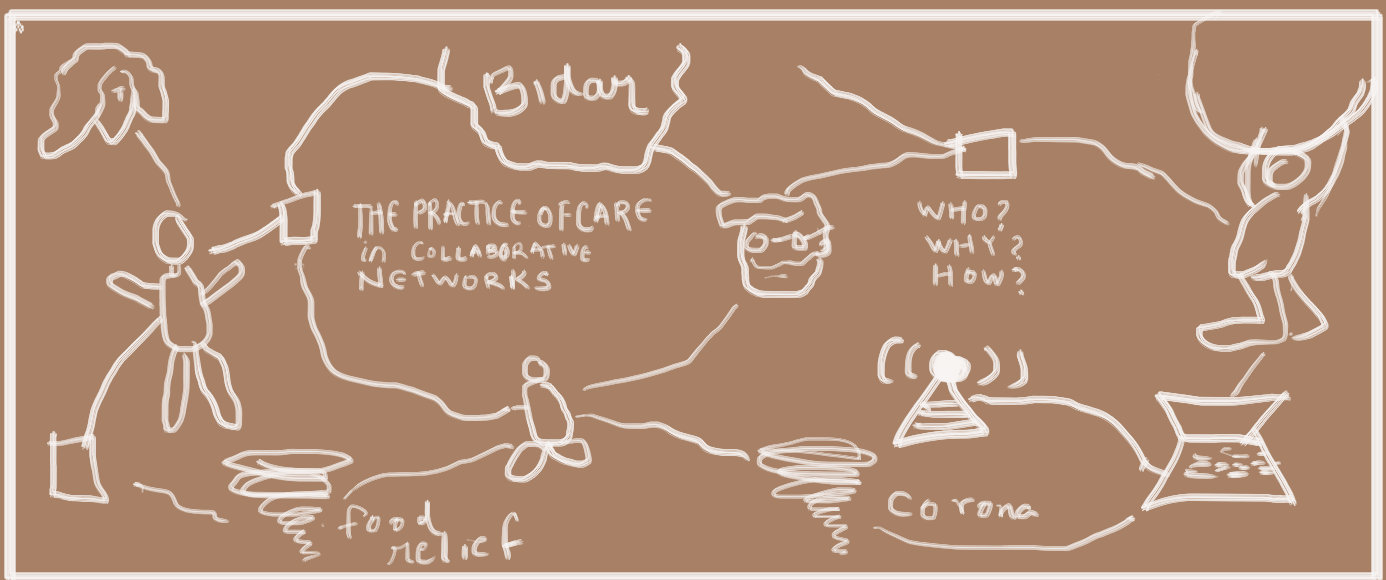
Fig 16: An old representation of me trying to make sense of what I am doing
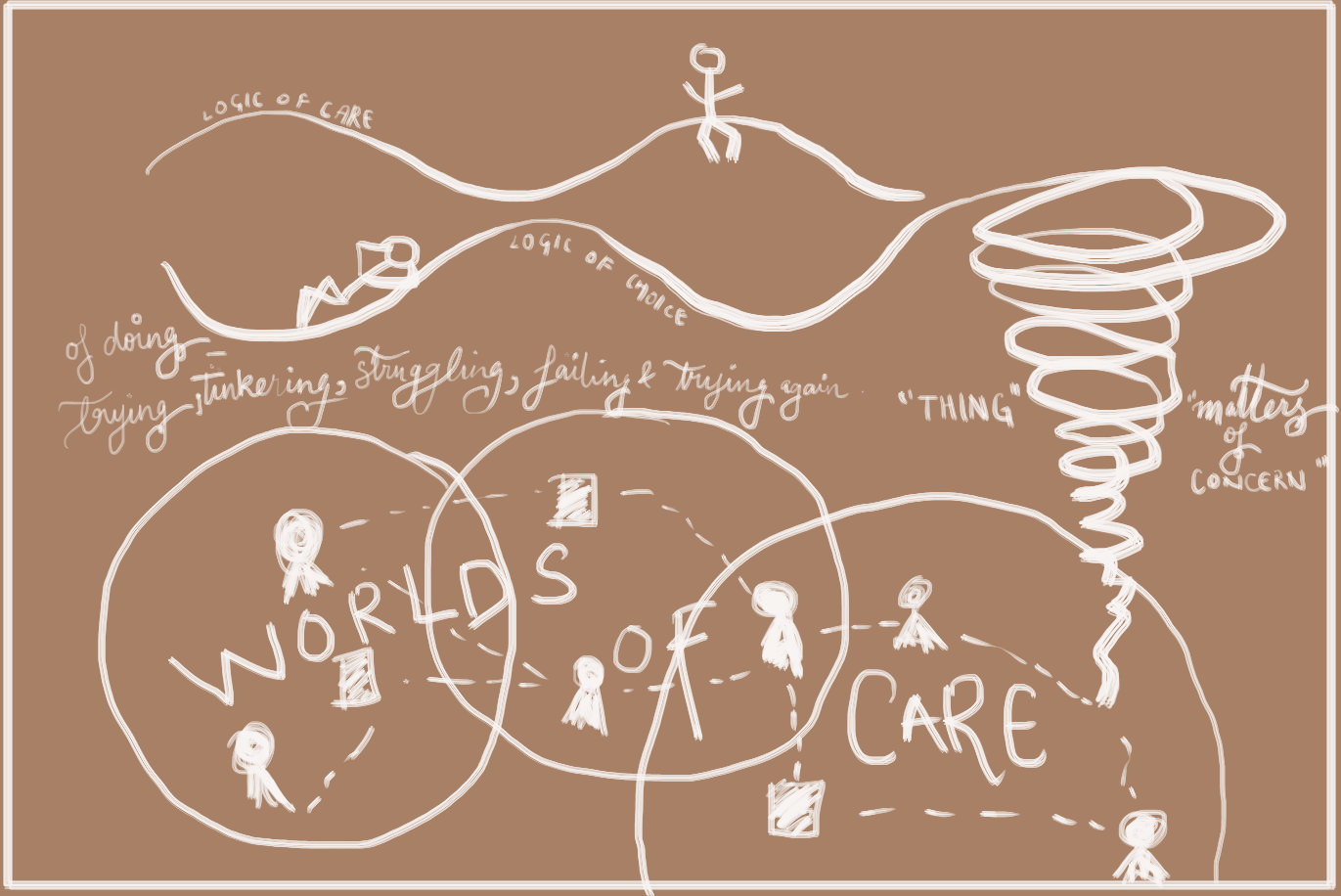
Fig 17: An old diagram of me still trying to make sense of this
Do-ings and Be-ings: A collection of micro-outputs
Repair as care means that ongoing work of tailoring, appropriation, and resistance is an attachment, for it is “to bear and affirm a moral relation” to the object. (Jackson 2013).
to think of care beyond a moral disposition, or a good intention, extending its senses to a material doing, the way we experience, perceive, represent, and live with things.
“Care stands for a signifier of necessary yet mostly dismissed labourers of everyday maintenance of life, an ethico-political commitment to neglected things, and the affective remaking of relationships with our objects” (Bellacasa 2011)
I present here a collection of experiences of do-ing and be-ing that helped me articulate ideas of care in networks.
Micro-Understandings
These are experiences that don’t have any making or practising form explicitly but it was instrumental in contextualising some of the other experiences.
Mudras for clay
Jahnavi and I went to the workshop of the Kumbhara potters. The workshop was principally a male domain. It was quite different from the home where we met Vidyawati ma’am where they were drying smaller vessels and clay instruments. The workshop space is where five brothers work from. It is a structure with a courtyard and a little more land in front of that. There are 5 rooms where each brother stores their products. The open space in front has a variety of utensils kept to dry, the women work within the courtyard, adding ash to the pots and other tasks which weren’t considered part of the main pottery work, according to the mother of the 5 brothers. As we sat there with them for a while, one of the brothers offered to teach us how to make a small diya. The process starts with adding wet mud to the platform on the wheel. There’s a long stick that fits into the notch of the wheel where you fit and rotate it forcefully and with a rhythm. He then showed us the exact hand positions that we need to mould the diya. I was immediately struck by how gentle and mudra-like it seemed. I had a lot of issues managing my hand pressure and keeping my body upright in a squatting position. Reflecting on it, the experience demonstrated to me how important bodies are, as a vessel of knowledge and practice. The rhythm, pressure and posture mattered in how the diya turned out.
After a few failed attempts, when I finally managed to make a decent one, he showed me how to cut it off the mud base with a thin wire. The cutting itself was a task of motion and rhythm. He said he would be delighted to teach us about the work if I came every day before 8. “There’s enough research and books about us, we like to teach. The last time a student came to learn from us, he was quite consistent and came every day for a month. We liked him a lot.” I started to play with the idea of researching through doing, but doing through learning. It sparked the idea of being an active and partial participant rather than an impartial and distant observer.
Grassy Computers
A team from Servelots-Janasthu ran a session in Naveen’s workshop about their work in the Tech4Good sector. One of the projects that were relevant to the context of the workshop was part of their effort to establish an internet radio that is mobile in Devarayanadurga. They were also using a Raspberry Pi to record and create an ad-hoc network. However, the part that I found most interesting is how they shaped the hardware according to the place and the practices of the place. Devarayanadurga is mostly rural and has a few forests around. Bullgrass is amply available there. They made a container for the device made of bull grass in the shape of a pouch. It started to strike me how the minimalism aesthetic of mainstream design and “clean curves” serves the purpose of delocating the technology. Situating the technology would also involve the effort of using context to shape how the technology is perceived and felt - tangibly as well as intangibly.
“City as an archive”
There was a point in the workshop where the groups were preparing to do activities with the communities that they had chosen. But as the day went on, many didn’t show up. While I was puzzled, Naveen got it immediately that it was probably due to fatigue of having 3 sessions in 4 days with us. He decided then that the workshop phases which were planned for more sessions of community participation wouldn’t happen. It was interesting to see how the facilitator in him was constantly on the lookout for the interests of the groups and not the interest of the activities and was willing to take a day off in the middle of a packed schedule.
In the exhibition space where Naveen’s workshop’s outcomes would culminate. I saw the way that cross-talk happened between communities of Bidar and the various groups that we had. The collaborating groups had a chance to see the outcomes that came about for other groups and comment on them as well. There was a table with the team from Servelots-Janasthu who were displaying and demo-ing their various projects and tools. Within the context of the workshop, the collaborating communities already had quite a bit of familiarity with some of the hardware. This made it easier for them to participate in the demo as well.
Micro-practices
This section outlines the times that I found another articulation of care through putting certain things in practice.
Rehearsing Alternate Futures
Shreyas and I were discussing the role of an archive in a community and how it has to move beyond a dead store. The activation of an archive happens when the community has agency over it and derives a utility from it. We were discussing how the practices are so enmeshed in their bodies and not a purely mental exercise. We discussed a few embodied ways of interacting with the archive. Around this time, Naveen and a studio of MA Ex. students came down to Bidar for a studio called ‘Archiving the City’. Naveen spoke about the way that archives are designed in a way that musemises people and practices. He wanted to co-experiment in the living labs for alternative imaginations of archives and how they can be used by the people to whom it must belong. I also tried a few ways to use archives in a way that channels more than just seeing them from behind a literal or metaphorical glass case. In what ways can archives invite responses and collective building of the archives if the input methods were designed by allowing for more bodily agency.
We were also using audio as the medium of archiving. However, there are many problems with audio, one that it doesn’t offer the modularity that text gives. This modularity would allow for more ways to annotate a voice clip or song. Another option that was closed off was the more cumbersome ways to search and index the song and the content within it.
Meta-Facilitating for and with care
Naveen showed me how a meta-facilitation practice works through the studio. Where I joined along with a group with Jackson, Giri and Ishan who were working with the Shayara ma’am. Besides that, I was involved with the other groups when they worked on their brainstorming for activities. Some of them had difficulties understanding the workshop’s intention because of the popular use of Hindi and the academic use of English. After a session of reflection, I would sit with some of them and try to work out with them the way that they interpreted Naveen’s sessions about the workshop.
There was a point in the workshop where I was the facilitator for a few days, which gave me a little anxiety on whether I would send someone down the wrong direction and I spoke to Naveen about it. Naveen told me how now I am part of the workshop for all its ‘good’ and ‘bad’ implications. As long as I understood some of my biases and the apparent “don’ts”, I would be part of shaping the workshop and that is okay. This helped me understand and augment my understanding of opposing design authorship practically. I also faced some situations where I couldn’t articulate the right thing to do for some students who were surfacing their own biases while working in the field. From the knowledge that I have struggled with the same thing in the past, I decided to take a safer route for the conversation and leave the critical parts of it to Vinay and Naveen, which they handled well.
After we went through the first two stages of the workshop, which involved acclimating themselves with the place and understanding the people we were working with. We started to discuss the tendencies of practitioners to separate a practice from its people, their environments, livelihoods and their everyday lives. As we moved into the third phase, we wanted to bring this research to the living labs and co-experiment with the brainstorming part of it. I led a workshop with children from the school at which Supriya is the headmistress. The children were mostly from the 8th and 9th standards. We had a strict deadline which wasn’t possible with our earlier plan so Supriya and I decided to change the structure to make some things faster. An initial briefing was done from me and I intended to get the children comfortable with speaking to us and also slowly understanding the idea of what things we wanted to brainstorm and experiment with them.
After they broke out into smaller groups, I moved around making sure to see if the facilitators themselves were participating and not just observing. The night before the workshop, Naveen was explaining the concept of an embodied knowledge through the way that he and his child count ‘red badam trees’ on the road and how they no longer needed to consciously see and count the trees. It was an aspect, I wanted to be able to encourage them to follow through on. It worked well when they brought the way to make it an embodied rehearsal of the future and demonstrated to me that the scaffolding was fitting in place.
Tooba - A Translation From Urdu
I also worked more closely with Ruksana ma’am-the Shayara. In conversation, she started to mention how the limited readership of Urdu literature was not ideal for writers in the language. We started to talk about how we could start the process of translation or continue with making her stories as audio episodes narrated by her. I offered to help her translate her work and she said she would like to translate “Tooba”, one of her books. The book was a collection of medium length short stories. Hindi was the in-between language and a second language to both of us. It was interesting, however, because I am a writer too and I was constantly watching for my style overpowering her prose. Sometimes, I would understand a phrase or word through intuition, however, the process of confirming the meaning from her in Hindi took a lot more time. The nuances of the word, juxtaposed meanings and just the way the word is structured would cause a lot of dissonances when I tried the more obvious choices of translations. The experience also took to task a lot of my assumptions regarding language and how natural language speakers find its rules. Often when ma’am would translate a word, I would find myself asking her if the word was a composite of two other words and she would not consider that as a good question because it is intuitive. I also would come to points where the English words would dangle at the tip of my pen but the experience of translating from Urdu to Hindi to English would cause many slippages.
Another concept that I started questioning was the idea of genres because of how she imagined her works as categorised on the most general level. Once after reading to us the story of a grandfather and grandson contesting and comparing their ideas and experiences of love, she said that she doesn’t like to write on such topics which were ‘khayali’ and it was more important to write real(sachhi) stories. At first, I thought they aligned with the English fiction/non-fiction binary but as she spoke more I started to realise how much it was tinted towards the way of suffering. Having a hard childhood, she remarked to me once, was the reason she wrote stories the way she did so that people who were suffering would get hope from her stories. Another time, she told me about how she knew her limitations, how she doesn’t include real-life details in the stories. Her physical affliction was such that she wasn’t able to see as much of the world as other writers. This, in addition to the fact that she was only educated till the fourth standard, made it all the more impressive that she was able to produce so much work and be known for being a writer all over India. She attributes her success to Allah and how she was always surrounded by supportive family members. The reason that she could write as she did despite only having studied until the fourth standard was that her father would get her books to help her overcome the loneliness that her affliction forced on her. She talks about how her husband has always been supportive of the things she does and helps her with her work. Uncle is a jolly person who’s always joking around and making her laugh.
Collaborative Translations
When I started making the COVID19 resource spreadsheet, we hadn’t yet started to translate the materials. I found an add-on to translate a sheet. It was surprising that Google Sheets didn’t have an in-built feature to do it. Prayag suggested that we rephrase it because the language was a direct translation and didn’t quite work. I also struggled to find a way to deal with a large number of English and Marathi sheets, and finally used the links within the sheets to create separate indexes for the Marathi sheets and English sheets. After this, Sowmya helped me rejig the translations with the help of her parents. It was heartwarming to see that they were so excited to help even though they didn’t live in Pune. I soon started to work with Viral Kindness group in Pune, they also helped finish up the translation and change things within the sheets.
Translations between community practices
I had come to Bidar and was living at the nodal centre of DLL. At the time songs, folklore and stories of women members of various communities were being recorded on Raspberry Pis. There was also an effort to familiarise the communities with the use of these devices. These devices were to become smaller nodes in a mesh network across Bidar and serve as an intra-archive to be used by the residents of Bidar. A roadblock that DLL and Janasthu-Servelots were facing was in the procurement of the Libre router devices to set up a Bidar-wide mesh network. They were costly and needed to be shipped from overseas and this process was creating a delay in operationalising the technical part of the project. People-as-Nodes was designed as an alternative approach to bypass this handicap where people would act as nodes and facilitate the use of the archive manually. The whole team thus designed a series of workshops to prototype and experiment with the way that the network would hopefully encourage annotation and cross-talk of these practices. The first workshop was held with three communities - the Kumbhara, the Bhooteru and the Shayaras. I wasn’t present for the first workshop with was to be the first of three. The first workshop was an effort to facilitate a process of self-annotation. The communities listened to their songs in sections after which they were given the time to draw or write anything they could associate with it. The Shayaras however, were given photos from different places, peoples and practices in Bidar and asked to annotate it through freewriting, prose or poem. I was only present when the second workshop was being planned. I introduced the idea of adding some more mediums such as clay and paper cuttings to the activity.
The Bhooteru group weren’t able to attend the workshop and hence we did the workshop with three women from the Kumbhara and Ruksana ma’am from the Shayara. The plan initially was to show each community the practice of another community and facilitate annotation of that. Since the Bhooteru weren’t present, we decided that Vidyawati ma’am, her mother and one of their community members would sit together with Ruksana ma’am. In this setting, they would listen to a song that the Bhooteru sang. Ruksana Ma’am didn’t understand Kannada and the Kumbhara women had a little difficulty understanding that particular dialect, so Dilip had to translate for them after every section. We offered clay, paper cuttings and writing material and told them to use whatever they wanted and make something in response to the sections of the song being played.
The clay helped the Kumbhara women to quickly start making things which they were most comfortable with. However, their annotations started to come out more in the things they said and the songs they sang in response. At this point, I was only getting used to understanding the idea of an embodied cognition and knowledge practice. I observed through the whole process how the material and their bodies working with the material opened up more associations for them. I have always wondered about the process of participatory activities and how each participant requires a scaffolding that helps create a translation. This translation is so much more important when it is a matter of language, privilege and concept dictionaries. In the process of linguistic translation, there is a lot of slippage because of how nebulous language itself is and how this slippage is aggravated through a second language. I posit that the clay was instrumental in becoming the medium of that translation.
It was a bigger barrier for Shayara ma’am because she was dealing with paper cuttings, which were not a medium she was comfortable with. However, in the whole process, her husband started helping her and a conversation started to form around the group. It was a bit of a learning experience for me and something I reflected on later as to the nature of participatory workshops. We, the facilitators weren’t actively a part of the workshop which took away the meaning of a co-creationary workshop.
Micro-makings
Through the process of making I was able to think through the process to see things a little differently.
The Flow of working
While we were making IEC material with DB, we started work on tasks in two ways. We would initiate a rephrasing of more global missives to contextualise them. The second way would be by entering the process after the initial rephrasing was done. These tasks would be accounted to different volunteers, who would then inform us of the stage at which the artefact was and someone else would pick it up.
The initial work started with a few people on a WhatsApp group. The interface didn’t facilitate modular conversations about the tasks for different stages of different tasks. Soon, important messages started to get lost in the long singular thread. We then moved the conversation to Slack, which again required a lot of articulation work to set it up kind of like we want it. Padmini and Naveen decided to invite more people to join the collective through a form. As new people joined, the nature of how we worked changed with the scale. Here it became all the more important to be able to have these conversations. Each of the tasks was made of smaller subtasks which would be done by one or two members each. This further complicated things so I made a rough spreadsheet which I shared with Padmini to discuss workflow. The spreadsheet allowed for a more minute scale of accountability and tracking. It also allowed members to work as much as they could and document precisely where they stopped to allow someone else to pick it up from there.
Gifs through Real-time Collaboration
When fake news about COVID19 was spreading and changing the behaviour of people towards medical personnel and other communities we decided to respond to it. In this larger goal, we started to have smaller projects like the one that Thomson started - the myth-buster gifs. He made them with a combination of XD and Keynote. However, since the coronavirus information was still changing at the time, he had to do these changes constantly. This took a lot of his bandwidth with the constant revisions. We needed to find a collaborative tool that was browser-based and quick enough to pick up. Especially in a time-sensitive context, we needed something so that many people could work on something so that we could put things out faster and constantly revise. I started to play with the UX prototyping features of Figma with a hunch that we could use it for the task. I did this by using the ‘smart-animate’ feature that they had made for movement between frames and triggering it through delay.
Payments for collaborating volunteers
Design Beku was a collective that had activated after the coronavirus started to look scary. It was also founded with the vision that it would be a collective with a flat structural operation during the effort to put out IEC material. At one point, Design Beku had a possibility of being funded and we needed to figure out how to disburse the funds among the volunteers. It also involved deciding collectively on the way that projects and tasks would be costed. After a conversation about it on the Slack group, we decided it could be one of two ways. The first option involved getting a lump sum and dividing it among projects and how many ever volunteers were involved. The other option seemed more appealing since task complexity affected the amount of time that was needed to complete it. For different types of content creation, the rejigging of information, translation, giving it a form as pictures, video, audio or gifs would all require different intensities of effort. We then decided to move forward with costing by the hour for each task. This involved making a repository of this data by listing the average time that would be needed to complete different tasks. This would be compiled with a list of volunteers and projects.
I decided to try making an app that could be used for this purpose. It involved having the volunteers input the work they did through the honour system. I worked on Glideapps that whole night and had a prototype ready by the next day afternoon. The process of making the app was a difficult one because of how Glideapps organises data on a spreadsheet with limited capabilities for interweaving data of different types. I couldn’t find a good way to this the way that I had articulated the problem. I wanted to have three main tabs on the app other than the data entry tab for projects, tasks and volunteers’ names. I hoped that the data entered could be represented seamlessly in the headings and sub-headings of each tab. But the modular structure of Glideapps made it unpredictable how it would be displaying the data and that became more complicated once I started to add the option to edit records on the app. The prototype itself was full of bugs and I needed people to test it and talk to them about it while also trying to contend with Glideapps.
COVID Resources for Pune
After seminar 2 when it became clear to me that I couldn’t go back to Bidar because of COVID, I stopped working on the project completely. I saw Ruchi’s tweet about how she made a Google sheet and Glideapp for Bangalore with resources and information that people would need in the coming days. I messaged her immediately and started a conversation about how I could do the same. I started to collect and collate information related to Pune but immediately ran into issues. I had to find the location and information regarding hospitals that were deemed first responders and testing centres. At the time, there were few testing centres in Maharashtra and 7 of the 10 were newly assigned. I couldn’t, therefore, find much of that information long after I put out the app and sheets. Other than those, I spent a lot of time gathering from my social media volunteer organisations and their contact details. Other than that I decided to create a separate tab for people to find organisations easily to donate to. Both of these organisations’ information had to be personally checked by the nature of the spreadsheets I created. This involved long nights trawling the internet for information and constantly second-guessing if the amount of information was verified enough.
The reason the same information was made available in two forms was so that we could provide alternative access means to the same information assuming differences in devices and reading capability. Ruchi and I also worked to put out a meta-guide for getting these resources together and putting them in the form that we had.
Fundraising Activities with Figma
For #KoiBhookaNaRahe, Team YUVAA and other organisations were working on-field to distribute food among the people of Bidar. These were included in relief packets that had other essentials like soap and sanitiser. Each of the packets was costly and the government was responding very slowly. We needed to raise funds if the groundwork had to continue. We decided then to create a crowdfunding campaign and we needed to add updates and stories from the field to the creative material that we put out for the campaign. We decided to collect the information whenever Geeta, Supriya, Dilip or Vinay had time. Vinay was sending updates from the field almost daily as well. On this side, Eeshita, Shreyas and I needed to put these stories together, edit them and work on making it reflective of the on-ground conditions. This was a little more complex to do because those on-field were already swamped. Using a zoom call, interviews were recorded which were also used. For the images and text that had to be created, it had to be done fast and collaboratively. I decided to move the process to Figma, which would allow us to do that. I made a few templates using the text from material that had already been made. These were reconfigured for different screen sizes. I wasn’t able to work on the campaign materials but Eeshita and Shreyas tweaked the templates to narrate stories of different forms.
A Website to Go
In the initial stages, Koi Bhooka Na Rahe wasn’t even named. Vinay and others had started the process of delivering rations and essentials to houses and localities. They used to post updates about the work on Facebook. This information would go out to the groups that Vinay was part of and would come daily. There was a need to put them together with the calls for funds. In the beginning, we used two images, which had information on what each relief packet had and the bank details to donate to. However, this text had to be copied by anyone who had the intent of donating. Since there was no website yet, I created an Evernote with a shareable link. Using it I created a template with the main calls to action in the beginning and the updates below. These included the bank details and kept updating the daily updates that Vinay put up with pictures. After using a link shortener I changed the URL to something easier to remember - https://tinyurl.com/BidarRelief2020. We used the same URL to put the campaign on Ketto, which had a website field to fill. With this, we were able to update the note on the go, while also providing easy access to the bank details.
The Struggle of the Choropleth Map
The cases in Pune started to rise and entire localities started to get sealed off. I was prompted by someone that a choropleth map of the increasing cases would be ideal. This was because both the PMC and PCMC were not putting out timely information. PCMC was posting maps of the wards and their active and new cases with random colours and unreadable text. I also felt that the citizen-led information portals on Instagram and elsewhere were only showing information from PMC.
I had to find a shapefile that included both the municipalities of Pune city. This was easier said than done. I found a shapefile of every ward in Maharashtra that was done through an open-source meeting of tech people and the government. I extracted the ward information of Pune and Pimpri through that file. However, since the information was old(2017) I had to rejig it and deal with the wards and zones as they are demarcated and administered today. I found a relatively recent shapefile for PMC which I decided to graft to my original file. However, the wards in PCMC had now been administratively grouped into zones and it was quite difficult to find a shapefile of that. However, using the maps that PCMC put out on Instagram as a reference I reshaped them and dealt with all the errors of my inexperience with QGIS.
I decided early on that if I had to make this, the numbers data would need to be something that people can change daily and it wouldn’t just be my responsibility. However, most of the tools I explored like Tableau, DataWrapper, ArcGis and QGIS considered the ESRI shapefiles of the maps and the data in the same.geojson,.json, or.kml file. There was no way to separate the data of the numbers from the shape data. The reason that this was important was that I was hoping to create a collaborative sheet with the Viral Kindness group and we could collectively update it. This was a struggle that went on for a while and the emotional toll of the lockdown had caught up to me. It was after that point that I discontinued all the self-initiated projects including the work of managing the Slack channel of DB. After that, I only helped out here and there.
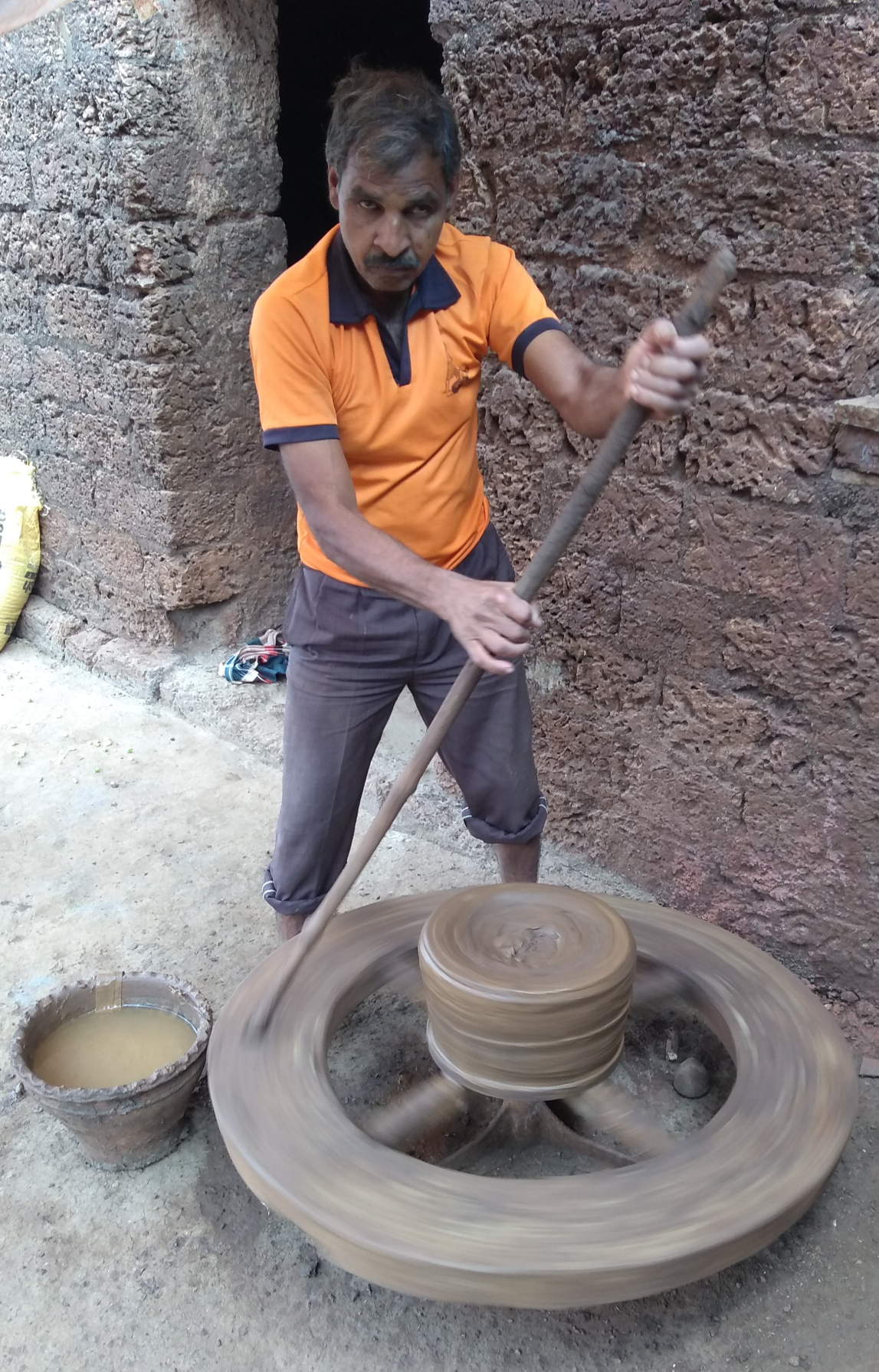
Fig 19: Kumbhara Potter spinning the wheel
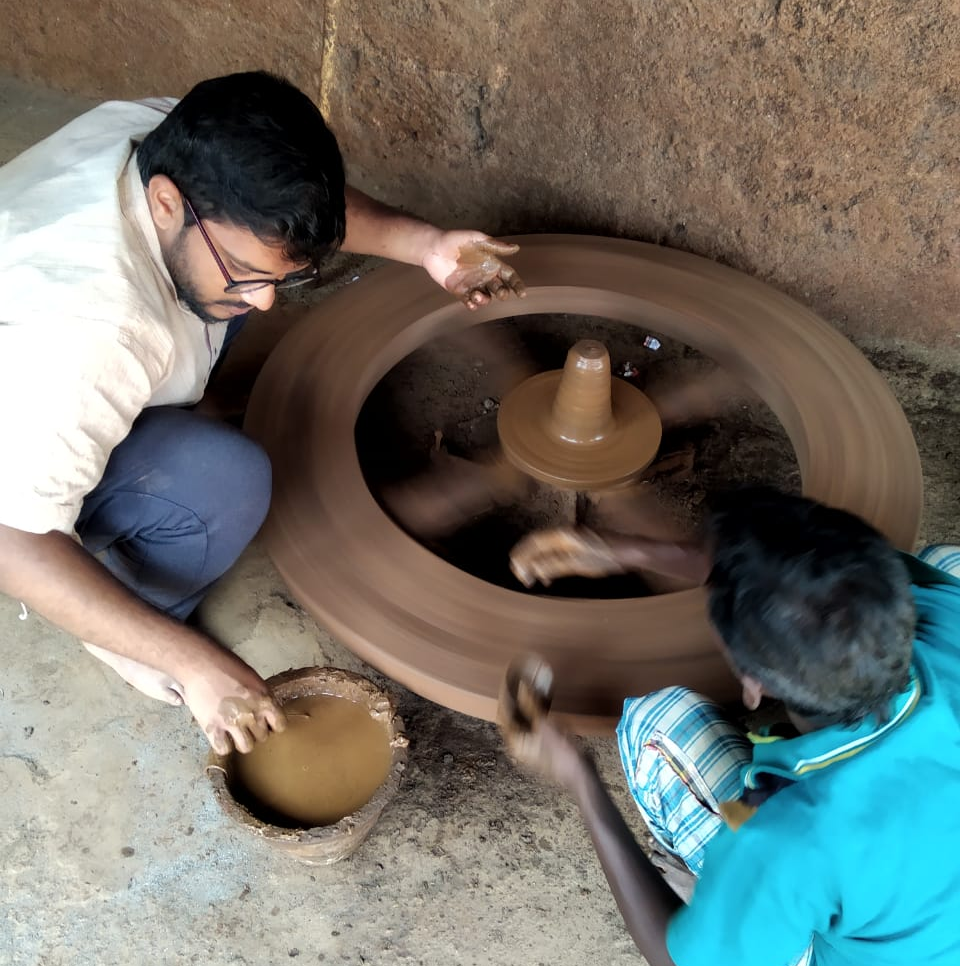
Fig 18: Learning to make Diya. Credits: Jahnavi Koganti
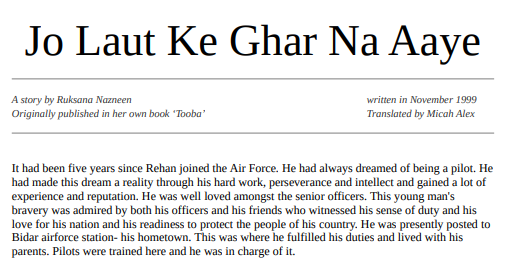
Fig 20: Translation of one of Ruksana Ma’am’s stories
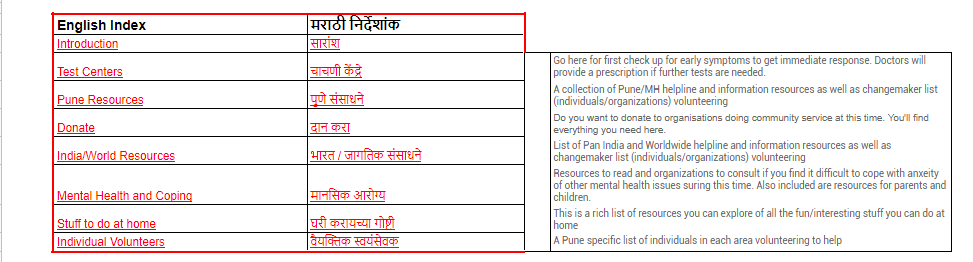
Fig 21: The sheet for Pune was translated by many different people into Marathi
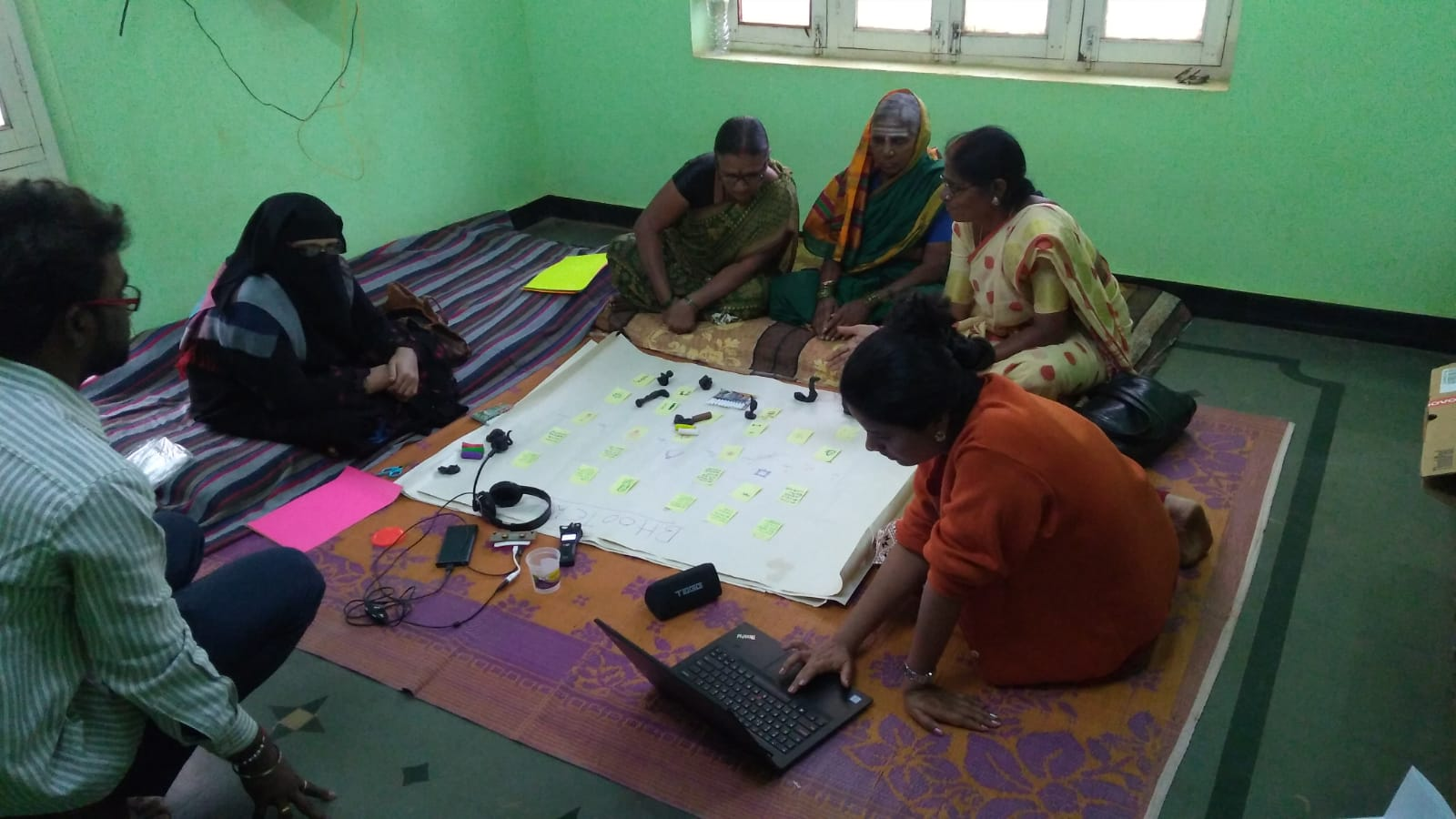
Fig 22: The workshop with two communities on annotating other community practices
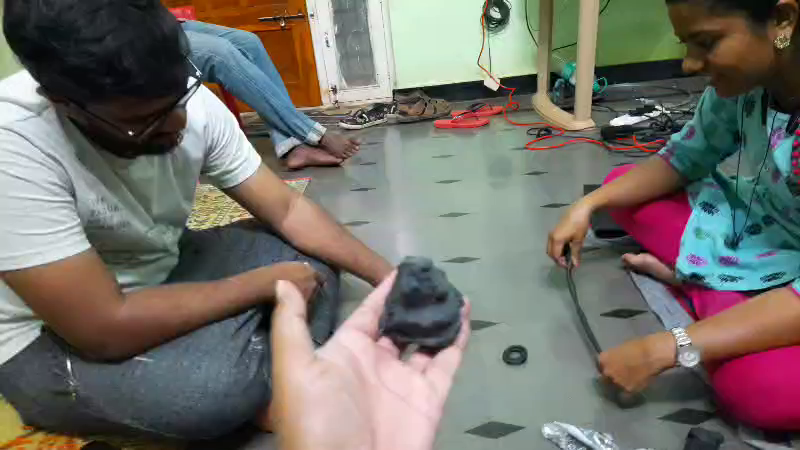
Fig 23: Dilip, Supriya, Vinay and I experiment with materials the day before the workshop
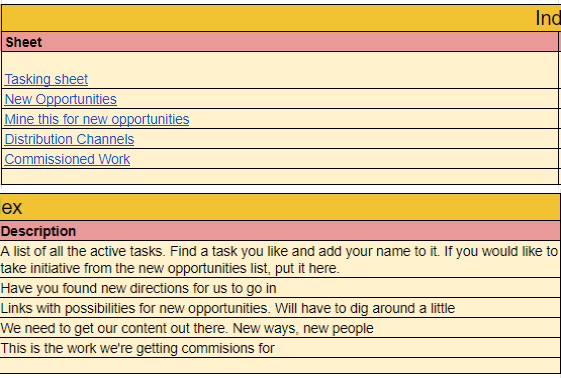
Fig 24: The workflow sheet had these headings
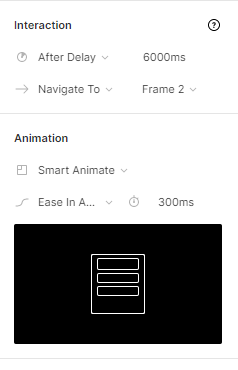
Fig 25: This is from the figma file used to create the gifmaking meta-tool
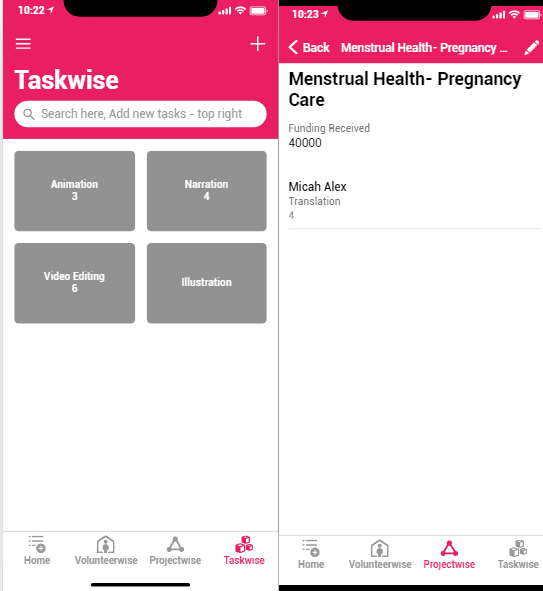
Fig 26: This is from the Glideapps for doing the costing for DB
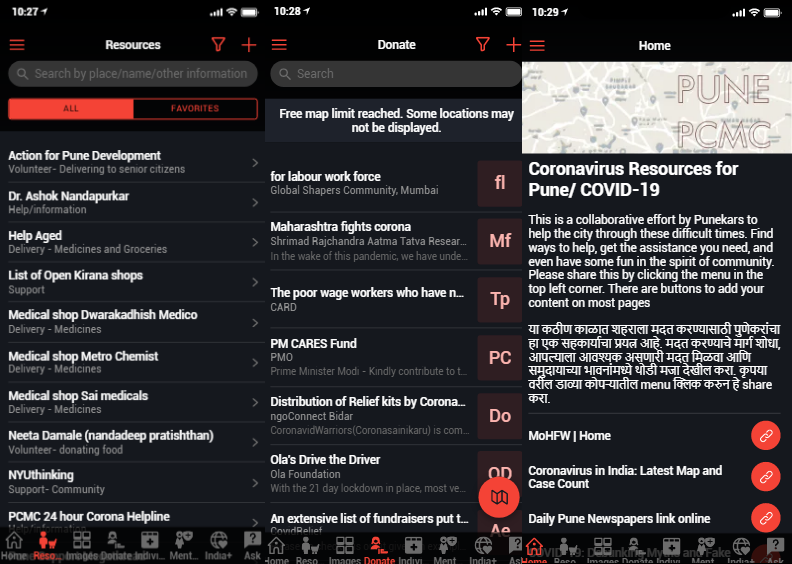
Fig 27: This is from the Glideapps for the Covid Resources Pune
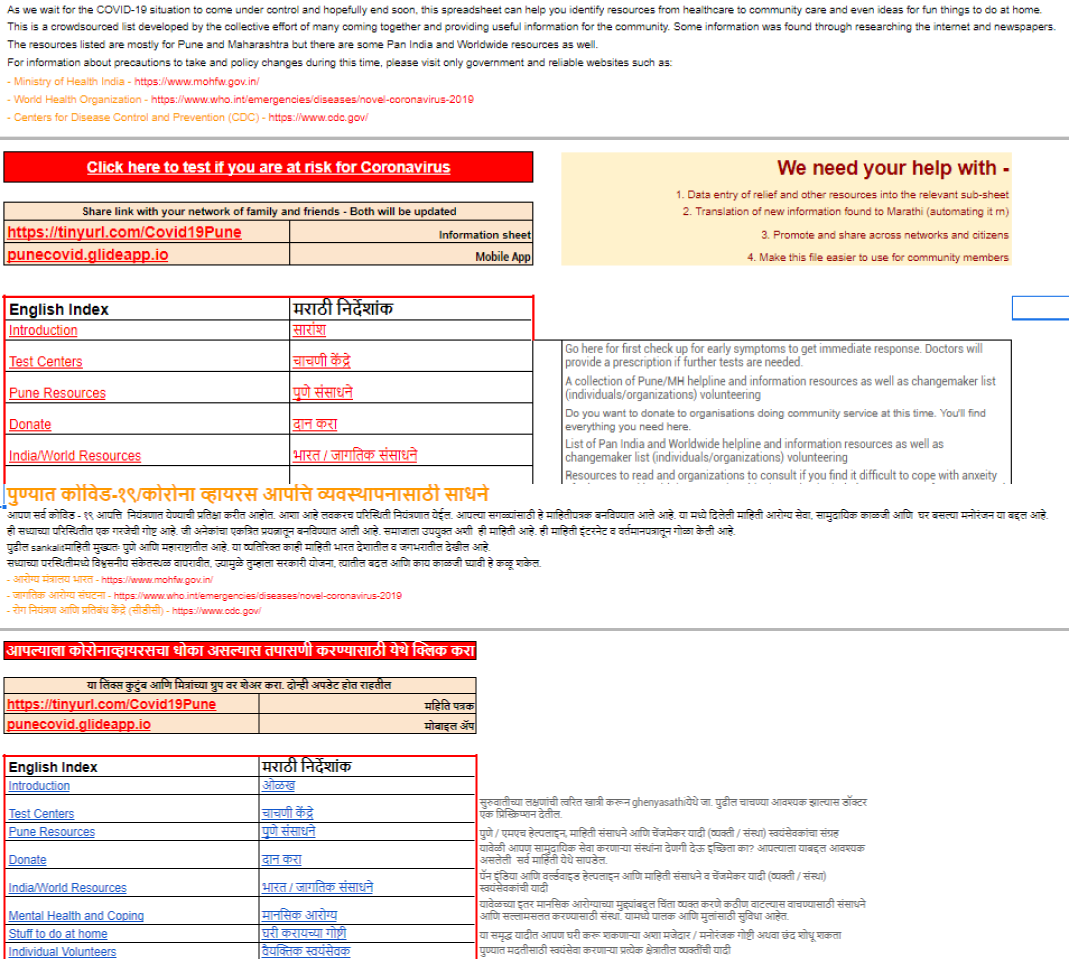
Fig 28: This is from the sheets for the Covid Resources Pune, translated
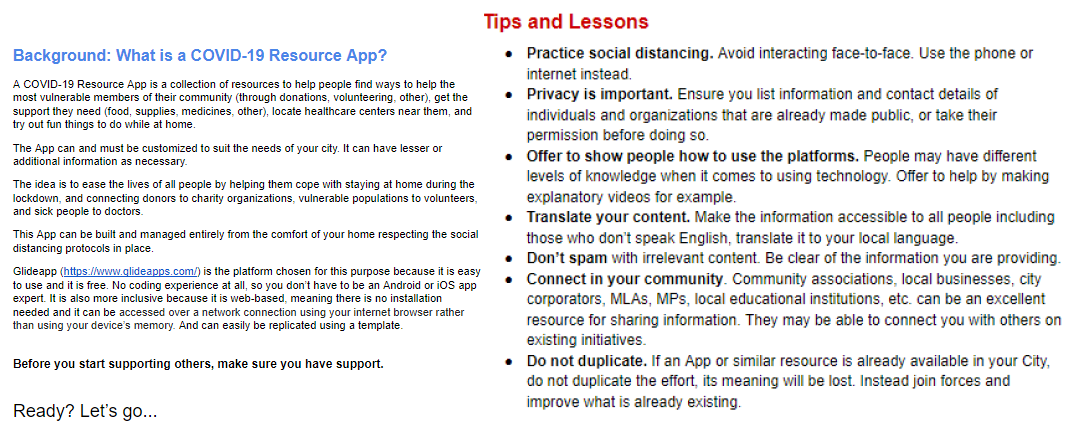
Fig 29: What is this Covid Resource App
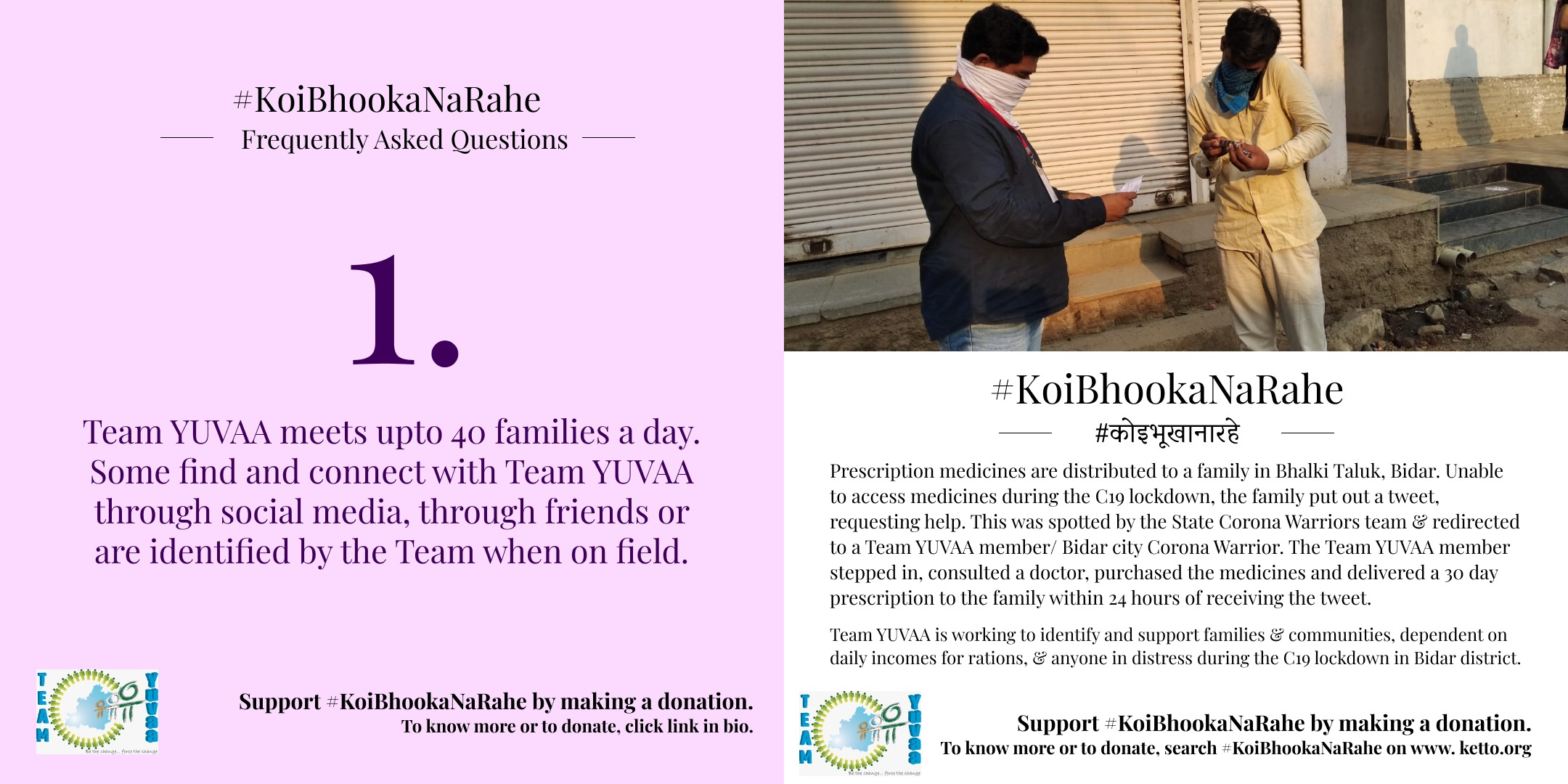
Fig 31: Fundraising Material that Eeshita and Shreyas made for Koi Bhooka na Rahe
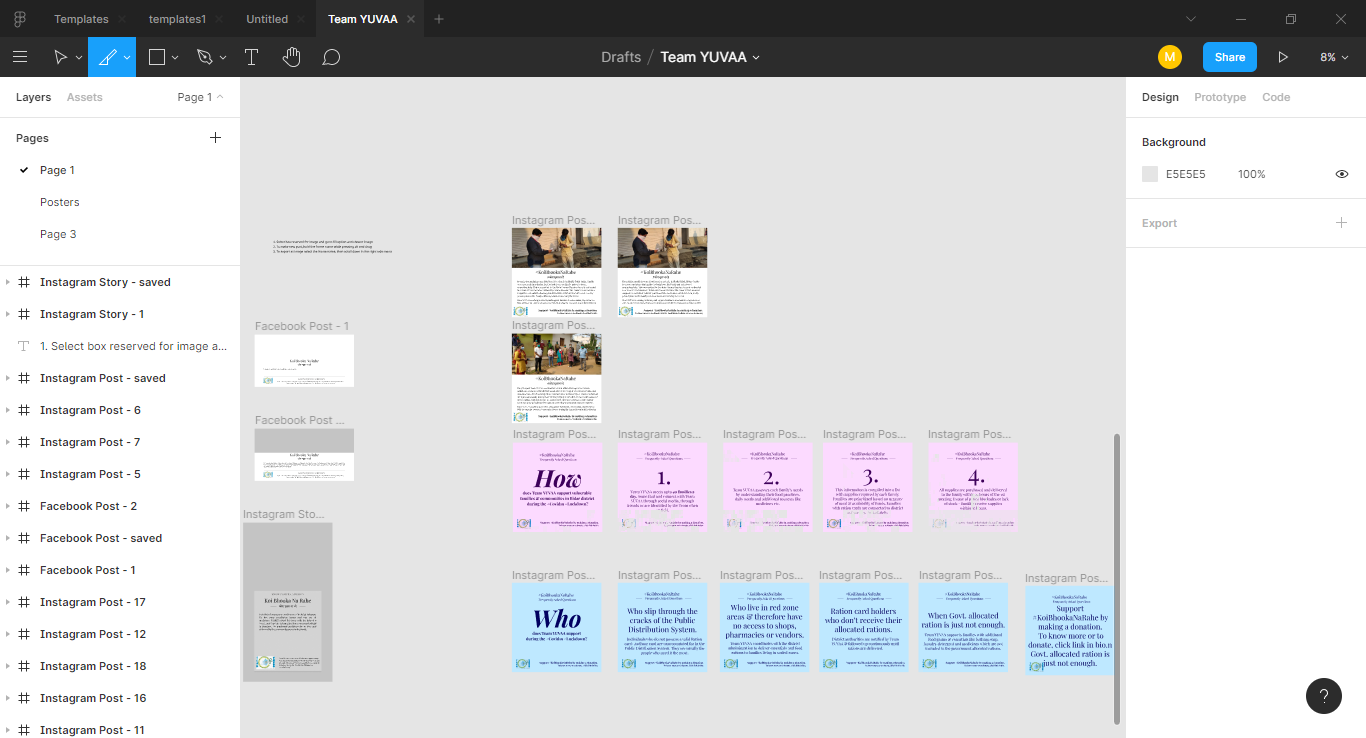
Fig 32: The Figma template used to make the fundraising material
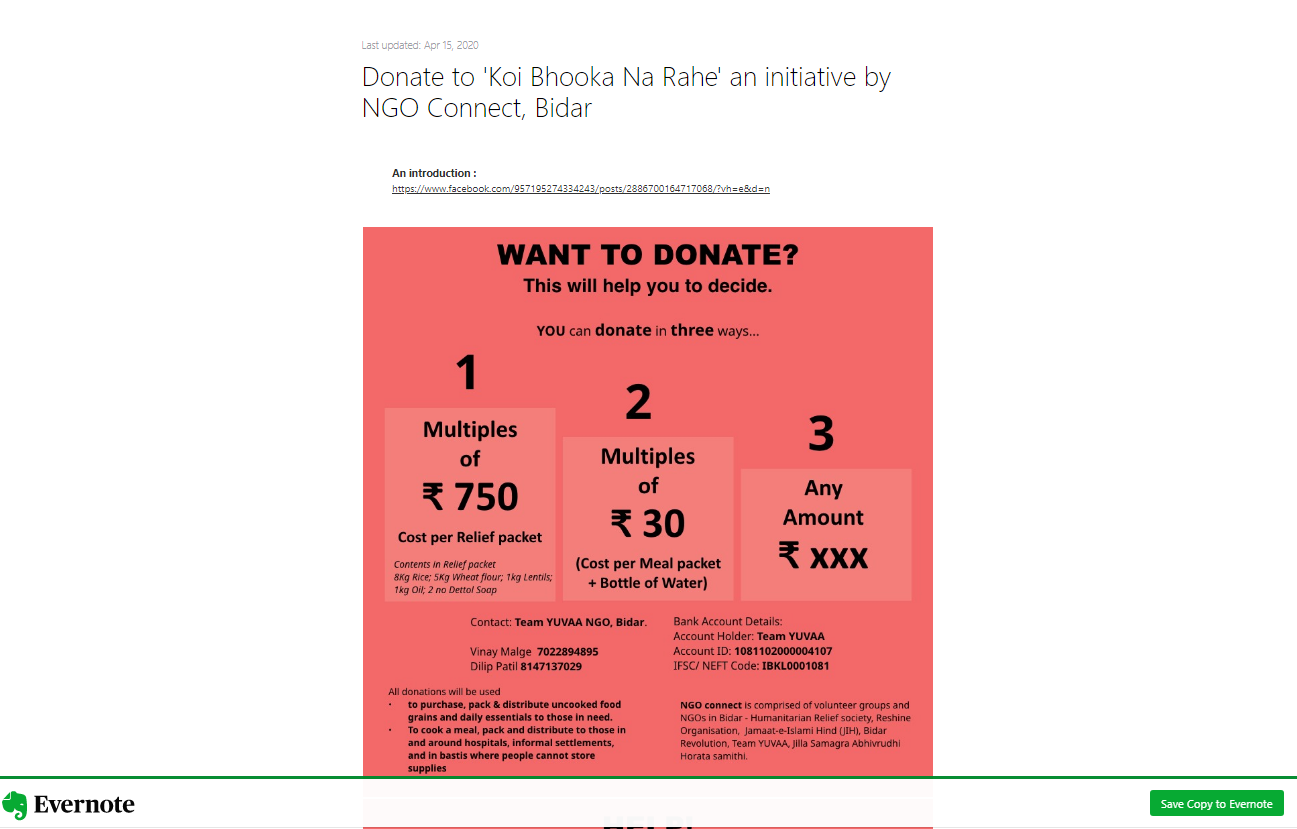
Fig 33: Makeshift Website for the fundraising campaign with donation details and daily updates
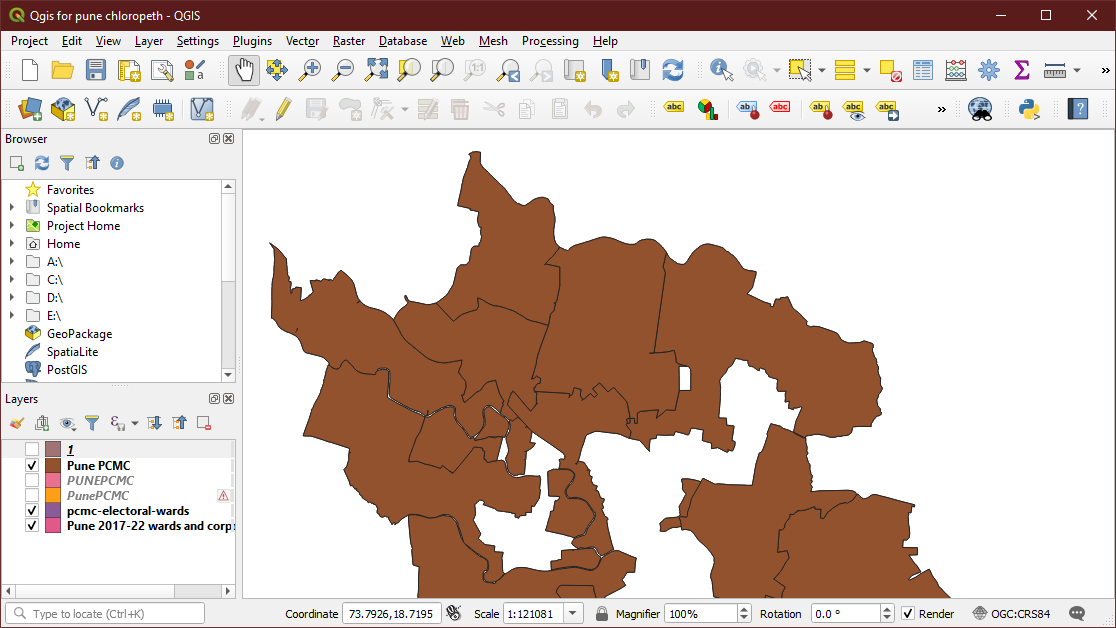
Fig 34: All the failed attempts at making the choropleth map
Describing Care in these Collectives
Drawing from these doings and beings, I describe care in these collectives using two tools. Archetypes and Axioms. Archetypes are roles that care-practitioners in these collectives undertake for specific types of efforts and work. Axioms serve to illustrate the shared common space that these networks launch from. Both of these serve to illustrate a neglected politics of care in those spaces.
Archetypes
Maintainers-Repairers
Maintenance in these collectives is essential to the longevity of the entire project(Hyysalo 2018). Myers’ concept of the worldly things has tried to explain how different solidarities and publics come together in cooperation or contest to respond to a “worldly thing”. The “thing” is cared for and emerges from the idea that world is a shared home for many different entities - human and nonhuman, organic and inorganic and that the world is an in-between/medium of conversation (Myers 2013). This coagulation of different contests and alliances around a worldly thing may happen slowly over time or be a rapid response. These modes of working each have their pros and cons and generally define maintainers as those involved in keeping up the momentum of the work. This may in terms of creating new excitements, flashpoints within the network’s work or nurturing the slow-moving parts of the collectives’ work. The former involves understanding fragility as not a weakness but rather a source of divergent pathways. The latter is usually a much harder process of working on something and keeping it alive, revisiting things. This is a much more invisible work often referred to as the ‘mundane’.
Hysallo and Hysallo, in their account of a participatory revival of a library talk about the invisible work that goes into making something participatory. Through their exercise of conducting a series of workshops across various experts and publics, they start to articulate the things that happen behind the scenes. from conducting many workshops, one after another, the aspect of feedforward and feedback started to emerge. Their workshops were used as a platform to generate imaginaries for the library which could help it in some way. The ideas, futures and imaginations that were generated in workshop 1 would feed into an aspect of workshop 2. This required a lot of articulation work-refining, elaborating and simplifying-to get it ready to use for the next stage. Other than this, there were constant back-and-forths to plan for different workshops, getting people on board, making marketing material, publishing results, obtaining consent etc. This kind of mundane and strategic work remains invisible in a lot of settings where it isn’t valued. The newspaper article about how people started to see sanitation workers and transport workers as an essential worker only after coronavirus pulled back the veil, drove home the point for me. (Sunday Times 2020)
Maintenance is an idea associated with the concept of the “broken world thinking” that assumes the fragility of the world as the norm but underscores and appreciates actions that undertake stabilization (Jackson 2013). The concept of repair takes the form of care in that world. Grant makes the argument that repair is a moral good only if it is one choice of many, however, broken world thinking helps us to be okay with breakdowns of people, technology, practice and excites us for the process of repair. This is largely also tied to the work needed to help create safe spaces for all types of actants. Morale work is part of the many mundane and strategic courses of action undertaken by care practitioners who wear the maintainer archetype in a network.
In collaborative networks, however, as I have observed and participated in them, the role of a maintainer-repairer has a lot of value. These collectives are already so fragile through the nature of the collaborations and the mismatch with what the market hegemony rewards. The lack of maintenance/repair work has much more immediate and dire consequences here. Shreyas often spoke about this to me in terms of persistence and morale. In Bidar, Khansaab has an amazing collection of historical artefacts and knows their stories. I haven’t met him. But I would be regaled by stories of Khansaab’s small house, filled from wall to wall cups and stamps and photos and of all the stories he had found and now tell about them. In Shreyas’ words, he was no longer a hobby collector but a “keeper of public memory”. However, Khansaab had other problems on the homefront, his children were growing up fast and didn’t have his passion for the treasure trove of things that he had. He was growing old as and slowly feeling the brunt of it. Khansaab felt and expressed often that he is frustrated by the seeming invalidation of his life’s work. He feels that he might have to sell his collection.
The story above is unpacking maintenance at multiple levels, for many types of actants. The organic and inorganic assemblages that surround a “worldly thing” or “matter of concern” need multiplicities of maintenance. Khaansaab’s understanding of history as witnessed and manifested by made objects helped him to care for them. He undertook a lifelong effort to ensure that these objects moved on with their stories to the next generation. However, his struggle to keep up his optimism at this point is indicative of the lack of a support system. Maintenance work is some of the hardest work and I witnessed the emotional toll of it. Keeping work up during the lockdown when I was trying to articulate a purpose for the Pune volunteer group - Viral Kindness - was becoming impossible. I started working with them on a few things. However, within some time, I was met with my own body feeling battered and worn down. I discontinued a large chunk of my volunteering work after that.
There’s also the constant theme of digital groups having a heavy passerby effect. To counter this is also a difficult task. In some of the collectives, I had my share of experiences with this. Messages that are read but not responded to, urgent situations that need people to stand up but no one does. This is not to moralise but rather a frustration of ignorance. Through some of my past experiences, I have always found it difficult to manage a group that comes together for something. Through this capstone, I had hoped to find a way to do it well. However, the work of the capstone has taught me how to manage these frustrations better and find alternative ways to do some things.
In Bidar, there is a community called the Valmiki Samaj who had a collection of songs that seemed Haryanvi in origin that they sang for the ‘rasams’- wedding, sangeet, Mehendi etc. They had songs for every part of the rasam and often sang in a group. Dilip and I went to the house of a grandmother that we knew sung these songs as we were archiving song and dance practices throughout Bidar, in the hope of establishing an intra-network on which such media would be stored, annotated and elaborated. The day we went, the grandfather was sitting outside the house on his cot that had large cotton ropes as the netting. A hookah the size of a 7-year-old kid was next to the bed. The grandmother was on a cot next to him and little more on the concrete road. She had her own smaller hookah. She was ill today and was lying in the sun because of that. Somehow, she mustered some strength to talk to us and she did, some of her energy came back and she offered to sing for us even though we said that we only came to talk to her today. After singing for a while, we saw that her health wasn’t good so we offered to come another day, with better equipment. Grandfather assured us that the next time, they’d call the women in the neighbouring houses who also were originally from Haryana and they would sing together. Then he said something that often comes back to me, “when there’s a lot of people singing when one person’s voice falls, another can take its place.”
Especially in collaborative networks based in the global south, there are a lot of things that have to be figured out for the first time. These might be ambiguities of people, practices, places, finances, legalities and other constraints that may be unique. The navigation of these politics and obstacles and nurturing of a collectives’ work are what make a maintainer invaluable as a care practitioner. The maintainer oils the process of revisiting old engagements, making new ones, and nurturing the current versions.
Translator-Weavers-Facilitators
The translator-weavers-facilitators connect ideas, concepts, struggles, people, practices while experimenting with the overlaps and distinctions with care according to context.
Through my experience working with Ruksaaan Ma’am and translating her work, I started to realise how her writing in Urdu comes with its own sets of support systems, conventions and issues. She often spoke to me about how Urdu wasn’t well-read in the current times and how the political turmoil only adds to it. Through Nakhads(critics) who write about her work and talk to her about her craft and give her honest feedback, she improves it. There is also a local event called a Mushayara where poets come on stage and recite their poetry.
This led me to think of the connotations that translation has as a word. Translation is also the process of facilitating a dialogue where the universal claim to knowledge is substituted by partial viewpoints. In this, translation is similar to facilitation in the way that I see it because it involves bringing in stakeholders who have their stakes deprioritised or invisibilised. In Naveen’s workshop, the group I was with - Ishan, Giri and Jackson had problems with languages in two ways. I sat with them repeatedly over and over, because of the slippage of language both in linguistic and academic terms, trying to relate stuff to how I worked out those same issues through my studios. Giri and Jackson spoke less, if at all any, Hindi. This was worsened by the fact that Bidar was a place where mostly Hindi was spoken and their classmates also spoke mostly Hindi. By bringing them into the conversation, albeit with a little extra effort, we added two more partial viewpoints to the conversation which would themselves shape the conversation. Additionally, the experience of facilitating these students and Naveen’s advice about placing myself in the workshop and not worrying about doing or saying the wrong thing struck a chord with me about facilitation in general. It was also pointed out to me by Shreyas when I asked him about how he acts when an obstacle or mistake becomes apparent in the course of the project. He said that it helps us move on when we see the challenges, mistakes and obstacles not as stopping points but rather as points of divergence. These are one of the points where new perspectives get added, evaluated or appropriated to the movement of the project. Internal and external conflicts, conflicts between facilitators and others, conflicts of time, money, mental health, physical health and space work as breakpoints to reevaluate our decisions. I started to see where this would fit in my role as translator-weaver-facilitator. The looseness and fragility of action allow enough wiggle space for the world to talk back to us. This connects also to Ella Myers’ notion of the world as an intermediating presence. This intermediating presence allows for looser spaces to evolve which facilitates a more concerted effort of translation and weaving together of ideas, places, people and contexts (Myers 2013)
The first workshop with Kumbhara and Shayara also illustrated how made objects also take on this role of a Weaver-Translator-Facilitator. The clay became a medium of translation between the songs of the Kumbhara and the Bhooteru. Through the making of the objects that she was most familiar with, she was able to respond to the songs of the Bhooteru with one of their own. The mouldability of the clay and her familiarity of the material helped her two translations, one from the Bhooteru song to the clay and from the clay to the songs of her community.
To claim that the world is a shared home is not to make the unsupportable assertion that the world is shared at all equitably. Rather, it is to say that the world, conceptualized as a tangible and intangible, organic and inorganic web,…The world’s commonality, both as a mediating presence and as a collective home, is something to be achieved or sought after; it is far from assured.(Myers 2013)
This “mediating presence” is also something that must be actively shaped in the light of the need for translation. This practice is something I rehearse through my understanding of meta-tooling. The Figma templates that I made for making gifs and the other for making campaign materials were something that urged me to think in this direction. The templates allowed for different people in a collective to collaboratively build, verify, edit and recheck the artefact in a time-sensitive manner.
I believe technology can play a big role in this practice, especially when designed with specific people in mind and responding to their imaginations of how the technology would fit into their everyday lives, their professions, places or their practice. An implication of this according to Lucy Suchman is the opposite of the ecosystem monopolies that exist today but rather “hybrid systems” that have interoperability between “multiple heterogeneous devices” (Suchman 2002). These hybrid systems are platforms for translations between what is introduced recently and that which is older as well.
However, this mediating presence also facilitates a space for a contest/conflict to arrive on the scene. In the ICAN group, we had our run-ins with engineers and developers who were trying to work on a much bigger scale than what we were attempting. Some, with a chip on their shoulder, entered the group announcing their intentions to help out groups “like ours” quite pompously. Ruchi handled it quite well as they interrogated her while also flashing their credentials constantly. I reflected on that conversation and why it unsettled me so much. There were so many varied responses to a global crisis, some like ours limited in scope and geography and others working at a national scale.
However, the belief that scaling up is always a good thing was being reflected in these responses and as those from the government with the advent of the Aarogya Setu. The important issues often give way to the interest of scaling. These issues include privacy, specificity, narrow-minded imaginations of algorithms, algorithmic black boxes, data protection and the metaphor of data being the new “oil” - to be extracted, refined, sold and marketed. The lack of transparency in these data markets is just another way to exclude voices. The weaving that happens there is an oppressive technocratic hegemony which excludes the real stakeholders and their bodies.
The weaver-translator-facilitator practices the rejection of these extractive practices and puts in the extra effort to be better. Through the exhibition of Naveen’s workshop I observed how important it was for collaborators to see how the time they invested in us, the academia was utilised for them. My initial dread of these exhibitions came from the question of “What can a student do?” Through the exhibition, I saw imaginations of a technological system and the one-day renderings of exhausted students still had an impact.
This exhibition was an amazing sight to see even though many people couldn’t make it. The guests who came were from our collaborator communities - a group of Bhooteru folk and Ruksana ma’am. A team from Janasthu was also showing their annotation software. The exhibition, though done hurriedly, was an important step in the whole workshop. It allowed us to demonstrate what work we were doing and hopefully become a little more worthy of their trust to keep working with them. In the same way that the clay opened up the conversation and allowed different people to respond to each other’s practices. As the made object, became a translator-weaver-facilitator so did the exhibition space. Space, filled with objects, imaginations and ideas of different contextual archival technology was demonstrative of their participatory nature of the workshop. It was activated by objects of shared imagination.
On the note of translation, I was lucky enough to attempt to craft a name with Vinay and Naveen’s help for the exhibition that would read similarly in Urdu and Kannada.1,2
Kale, Kride, Kalpane - Art, Doing/Playing, Imagination
Tehzeeb, Tehfillat aur Techne - Culture, Imagination and “Techne”(root for Technology but implying the belief systems that guide making and doing)
Storyteller-Archiver-Guides
Another interesting idea that I got to explore through working in Bidar was the idea of how archiving and storytelling are activities that tethers a community together. The project “Co-Creating Local Knowledge Network’’ that DLL applied for a grant to implement with Servelots as its partner was one such exploration. Through the project, DLL and Team YUVAA worked to map the various practices of Bidar that involved singing and storytelling. I got involved in after more than half of the project timeframe and was able to accompany Dilip, Supriya and Vinay on many such activities. Servelots and DLL were trying to put in place a local mesh network that would act as a store for such practices of women and non-binary groups. The idea was that it would be locally stored and accessed. Through the activities, I got to meet people from various communities like the Kumbhara, Bhooteru, Valmiki Samaj, women Dholak players, Shayaras and Khitmatgar. Each of these practices had a rich history of women/non-binary groups singing and speaking about their culture and history.
The local mesh was built first in Devarayanadurga, where a local internet radio was managed by school children. The intent was to build this local mesh using open-source hardware that would have a long-range in transmission and be durable to the elements. At a point, the project was severely delayed due to the inaccessibility of the technology in India and the difficulty of procurement. During this time, Dheeraj, Shreyas and Vinay decided to move to the framework of People as Nodes. Instead of having routers which would work as nodes for the local mesh, people would collect the stories and songs on Raspberry Pi devices that enabled an ad-hoc network. It was during this time that Naveen and a group of M.A. Experience students came to Bidar to explore the idea of a contextualised archive that enabled these collections to be more than just dead stores. The idea was to involve these communities in the reimagination of these technologies to start to talk about the various ways in which the archive could come alive. It immediately felt like the stories of the Kabooliwaala. The wanderer in many stories who sold toys and knick-knacks and told stories of the past. Even the story of Khansaab was one such story that sparked this imagination in me. I could imagine a future in which an atomised community like an urban setting needs these shared experiences and people and sensemakers to make sense of the world. A recent example was the Italian lockdown videos of musicians playing from balconies and whole crowds of balcony audiences chiming in.
This connected with me on various levels because of Eragon - a book that I’d read before. Eragon lives near a town with an old storyteller named Brom. It is a time of hardship across the kingdom, the taxes are high and legal systems seem to be breaking down because of rumours of magical creatures that are to be feared. Brom, on a few occasions, tells stories at the place where the townspeople gather. He tells stories of old times when dragons existed and were at war with the different species of the world. He talks about a time that came later, where dragon riders were selected every generation among the species as part of a peace treaty and how the governance system was fair and just because of the dragon riders. It turns out later that he was a dragon rider himself and was part of the rebellion against the tyrant king who had now put the entire kingdom of humans under his subjugation. Forcing the other species to retreat where his immense power couldn’t subjugate them as well (Paolini 2003). He then becomes the first teacher to Eragon and opens us new possibilities for the world they lived in. The archiver-storyteller-guide has a similar practice in the way that I envision them. They archive the multiple and often erased histories of places and collectives and uses them to demonstrate that the current state is not one to resign ourselves to or even help the world in imagining different possibilities.
Even though the coronavirus was a universal fracture, many existing and emerging fractures disrupt the lives of distinct communities. The role of a storyteller-guide becomes more and more important in these times. The urgency of situations often allows no space for other perspectives to emerge and that is when the role of the archiver-storyteller guide becomes important. I also include this as a role that researchers can place themselves in; as I do through this document. By documenting practices and technologies and how they evolved meanings over time, researchers can open up conversations of alternate systems and futures.
Axioms of Practice
Fragility
Underlying these collectives is the core idea of fragility which manifests itself in many spaces that the collectives must operate in as well as the structure of the network itself. These networks demonstrate this fragility in both an overarching manner as well as in the everydayness of it. These are easy to come across in the very simple operational matters.
When we were talking about volunteer time commitments in DB, Thomson said something very important to the group,
“Voluntary thing. No hard deadlines. Contri whenever possible, keep things shared so others can pick up if you’re down. Keep things moving but sustainable.”
Operationally, it offers an alternative way of working which has its merit. However, this often brought me up to an “internal wall”. It would be often something on the lines of how “this is not how things work in the real world”. In the real world, there are deadlines and timeframes, strategies and liabilities. Work couldn’t possibly be done in this way, could it? There’s no way that a group like this could have an impact, can it? When some of my internal walls manifest and realise themselves, it’s a confirmation of these assumptions of these networks being breakable. This was a difficult thing for me to navigate.
These internal walls have come to me in many places, and I will be using my retrospection to describe the fragilities that I saw. I asked Shreyas about how he deals with obstacles and things that don’t work out in a project. His reply to me was something that changed the way that I thought about the fragility of these things. “It isn’t an obstacle that stops you rather, it is a point of divergence.” This point of divergence occurs in the times of coming up against walls, external or internal. However, this is something that requires a readiness to bear the burden of the divergence. When I was working on the choropleth map, I witnessed this. I had been working on the COVID 19 Pune app for a while, constantly updating it and verifying the information that went on it. This, however, soon brought me to a point of exhaustion and I decided to find some help. That is when I started working with the Viral Kindness group for Pune the map was to have a collaborative object for us to work on together. But when that didn’t work out, I could feel the exhaustion in my body. By some time, there was no energy for me to bounce back either.
“some bodies become depleted because of what is required to go somewhere, to be somewhere, to stay somewhere.” (Ahmed 2017, p.186)
Another implication of this fragility that I saw was the move from liability to accountability. In the app that I made to handle fund disbursals for volunteer teams, the honour system was the core operating principle that I used. Volunteers weren’t held liable for the work they did, the information they gave about their work. However, they assumed accountability for them. This comes from the shared understanding that they are part of something fragile. I have also previously seen the manipulation of these beliefs by networks to exploit their members. This also is an indicator of the connections that these actants and the networks have among each other and with other enabling institutions. These connections are of many types-some fragile, some symbiotic, some parasitic and most others a hybrid of these. These connections are also different manifestations, linkages, relationships between many different identities. The practice of care often involves discussions and decisions about the packing and unpacking, the integration and differentiation of these identities. These things often involve deciding what might be better at what point.
“But, while it is impossible to ascertain in general what it is good to do, this does not mean that everyone has to figure it out for herself. The task of establishing what ‘better’ might be involves collectives.” (Mol 2008)
I have seen this as practice in DLL as well as DB, where group conversations happen about new sources of funding, new projects and collectively understanding whether the engagement would be “good to do”. Another conversation that merits this kind of collective concern is the question of melding and unmelding identities between people, collectives and institutions. These reflect in the processes of adding people to the collective, discussing if overlapping collective identities are to be differentiated for projects or endeavours. It is also a question of asking which identity is more suitable for a project. This kind of nebulous identity is flexible and fragile at the same time.
Sara Ahmed describes fragility in three ways:
- The quality of being easily breakable
- When being breakable stops possibilities of doing something or reaching somewhere
- No longer able to grasp hold of what we need to persist in something (Ahmed 2017)
If this is what fragility means for individuals, how does this translate to the collective sees the world. Practices such as adding to the collective then go much further than mere skill or capital, whether it is for people, other collectives, institutions or corporations. Even for things such as keeping up morale after a setback, it is anticipated because of a more honest view of our collectives.
Counter-hegemonic practices
I wrote before about ICAN, and how there was a conscious unspoken decision to stay at a small scale and not “solve” anything. The saviour idea of technology is looked at quite humbly and seen as a tool that needs to be situated. For DB, there were some spaces where this “stand against” becomes clearer. While we translating the IEC material, I would sometimes take on Marathi and Malayalam. I have a conversational hold over both languages and often I would stumble where a little more complex concepts were included. Soon, I started to rely on Google translate to do my work. At first glance, the output seems okay but often quite formal. After reviewing my work, Naveen re-edited once and told me how he had to “de-sanskritise” it. That got me thinking about how the differences between formal and informal language is often a story of imperialism or colonialism. Instantly transported back to school, how even though I could read and write literary Marathi, I wouldn’t be able to speak colloquial Marathi. It was only later that I realised the differences lay in the Brahmanistic influence on Marathi and the relation to whoever couldn’t speak the “Puneri” Marathi was considered “gavthi”(a slur that means village-folk). These actions require us to constantly think about how we talk about our work, what is our work, how was it done, why it was done in a certain way and question everything. Care is a very political act in the sense of what it questions and that has reflected in these collectives.
Relationships
Another thing that I have seen the collectives question are the arbitrary yet normative way that relationships have been formed. I spoke to Shreyas about scoping Bidar for my capstone, and visited it once for a week and he added me to the main group of Living Labs. I was bewildered by this. As I worked with DLL longer, I saw this in the context of how relationships were formed, taking into consideration personal feelings, larger engagements. I started to understand how adding people was less about the opacity of the “top management” but rather the convenience and bandwidth of the collaborators. DB, DLL, LLN and Team YUVAA are quite closely interlinked in terms of the in-betweening of contexts and collaborators. However, discussions about matters of identity often emerge only in terms of the differences between the identities and what each can or cannot do, not in the prescriptive sense but rather as a matter of humble honesty.
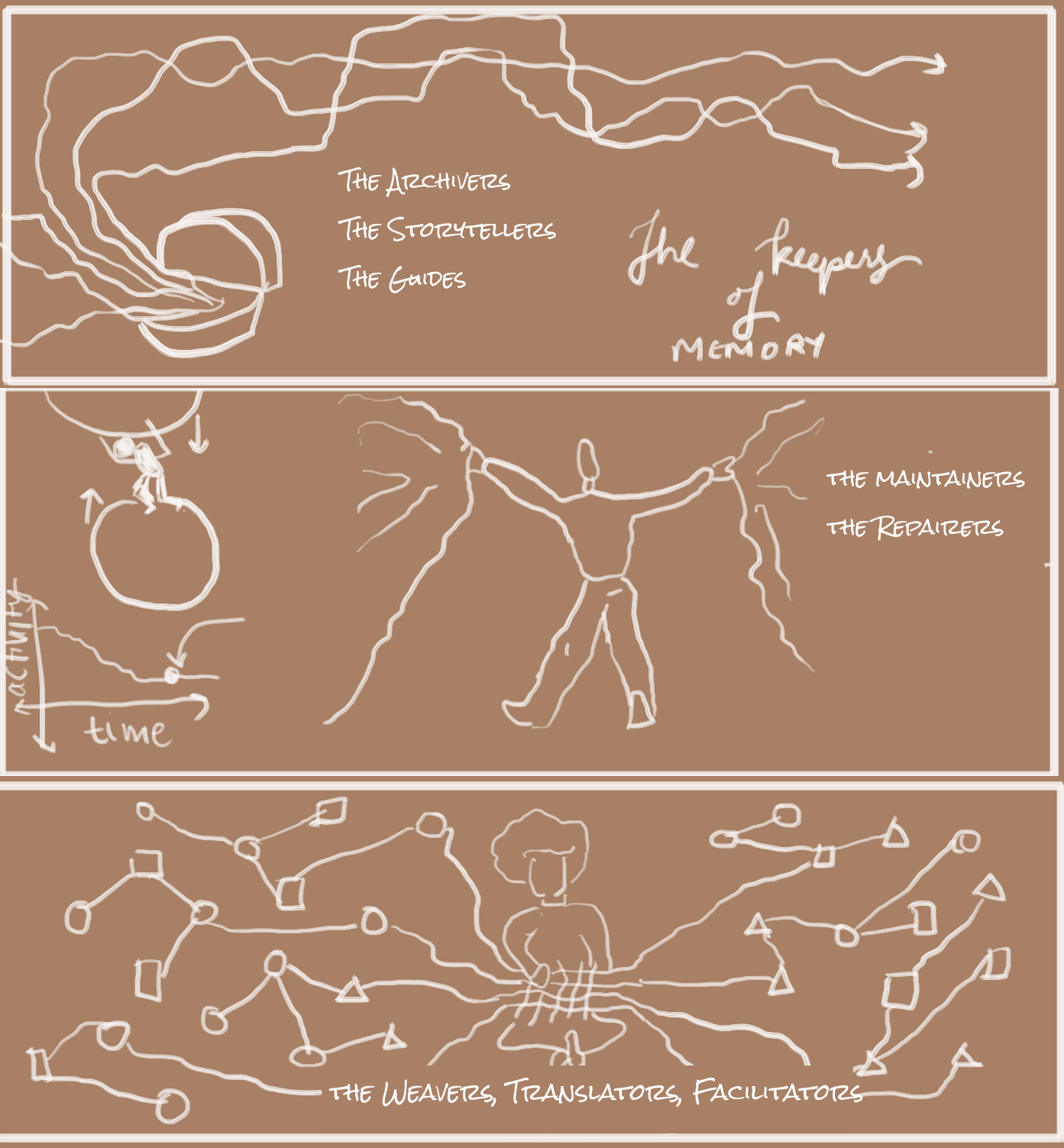
Fig 35: An early attempt at visualising the archetypes
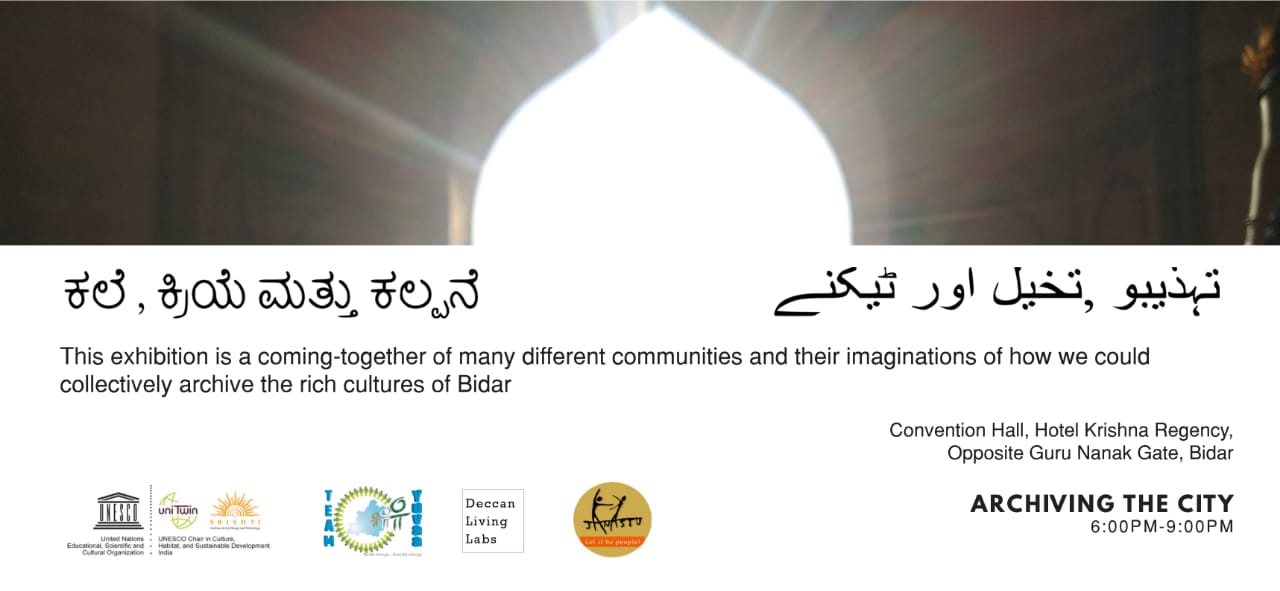
Fig 36: The poster I made for the exhibition
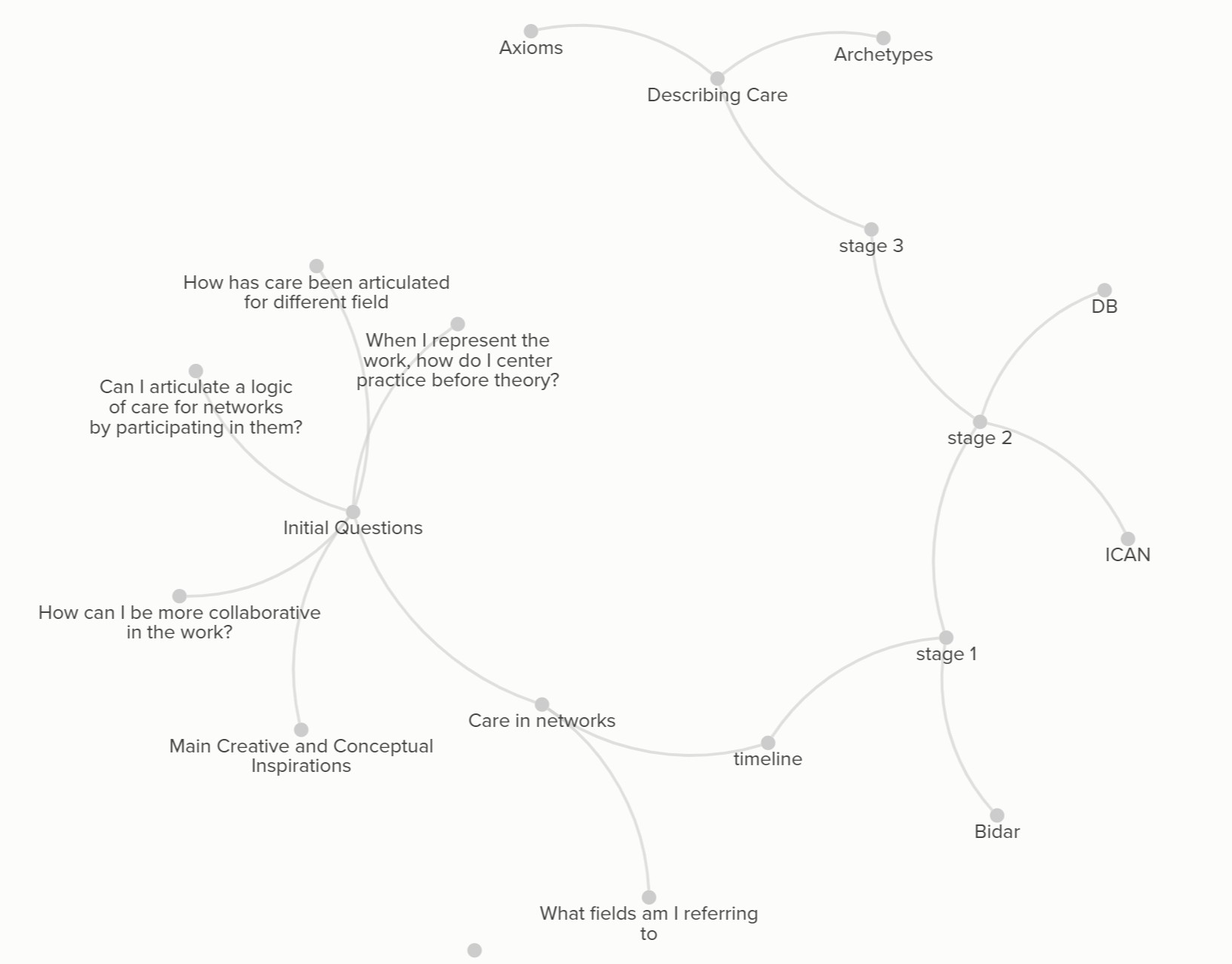
Fig 37: An overview of the capstone

Fig 38: This QR code redirects to all the web artifacts listed
Conclusion
I have discussed my experiences of different collectives and I witnessed care manifesting in them. The research opens up ways of looking at networks in a systemic and structural level through the lenses of care. Care systems are working in each of these collectives and quite probably in every network. The people who are part of these care systems often adorn themselves with different roles of care-practice that might allow them to nurture collectives. This is also a smaller exercise in reimagining networks structurally and revisioning how they coagulate, evolve and operate. The shared assumptions carried by these collectives often enable them to ground themselves and move beyond the few normative methods of being and doing in a network.
Fragility is an honest and important understanding in this sense because it changes the way we look at incentives and penalisations as a motivation. I imagine this in the sense of “broken world thinking” and how honesty helps us to better appreciate care practices.(Grant 2020; Jackson 2013) The relationships of these collectives are pluralistic and multi-faceted, each requiring a different aspect of care practice. I think that a large portion of these newer networked practices emerges as a result of their stand against a hegemony of materials, knowledge, scales, relationships and hierarchies. And some of these practices of care from the necessity of this “stand against” causes a fracture and sets up the network to fail when looked at in relation with the belief systems that surround it. But also, as Sara Ahmed says, a point of breakage isn’t just that it is a point of becoming - a divergence from the norm, new protocols, practices, ways of finding capital, engaging with people, engaging with other institutions and networks emerge.
“Shattering: scattering. What is shattered so often is scattered, strewn all over the place. A history that is down, heavy, is also messy, strewn. The fragments: an assembly. In pieces. Becoming army” (Ahmed 2017, p.186)
It is a “diseased” collective in a world that claims to be effective and optimised. If living with the disease isn’t seen as a temporary thing, but rather as the norm then maybe care is the best way to navigate that.
“The logic of care is definitely better geared to living with a diseased and unpredictable body… examine it, adapt it, fiddle with it, push and pull it, alter it, as and where this seems right. The logic of care as I articulate it here is not something to solidify or cast in stone. Not at all! It is fluid and adaptable. But it is a good place to start from since, instead of addressing only the part of us that is healthy, it takes us seriously as we are, diseases and all. It seeks to nourish our bodies; respects the collectivities to which we belong; reacts forgivingly to our failures; and stubbornly strives for improvement, even if things keep on going wrong; though not beyond an (un-)certain limit, for in the end it will let go. Although it is difficult to relate to one’s own suffering in a clinical way, learning to combine being active with being receptive does more than strengthening our capacity to care. For the ability to let go actively not only makes suffering easier to bear. It is also a precondition for experiencing pleasure.” (Mol 2008, p. 83)
Bibliography
Ahmed 2017
Ahmed, Sara. “Fragile Connections.” In Living a Feminist Life, 163–86. Durham: Duke University Press, 2017.
Alex 2020
Alex, Micah. 2020. “How To Destroy An Entire Community In Three Steps.” Blog. Micah Alex. https://medium.com/micah-alex/how-to-destroy-an-entire-community-in-three-steps-27bb8bd5c960
Bellacasa 2011
Bellacasa, Maria Puig de la. “Matters of Care in Technoscience: Assembling Neglected Things.” Social Studies of Science 41, no. 1 (February 2011): 85–106. https://doi.org/10.1177/0306312710380301
Bondi 2003
Bondi, Liz. “Empathy and Identification: Conceptual Resources for Feminist Fieldwork.” ACME: An International E-Journal for Critical Geographies 2, no. 1 (2003): 64–76.
Gatehouse 2020
Gatehouse, Cally. “A Hauntology of Participatory Speculation.” In Proceedings of the 16th Participatory Design Conference 2020, 116–25. Manizales, Colombia: ACM, 2020. https://doi.org/10.1145/3385010.3385024
Grant 2020
Grant, Jenna. “Repair in Translation.” East Asian Science, Technology and Society 14, no. 1 (March 1, 2020): 15–33. https://doi.org/10.1215/18752160-8233535
Hyysalo 2018
Hyysalo, Virve, and Sampsa Hyysalo. “The Mundane and Strategic Work in Collaborative Design.” Design Issues 34, no. 3 (July 2018): 42–58. https://doi.org/10.1162/desi_a_00496
Iyer 2019
Iyer, Deepa. 2019. “My Role In A Social Change Ecosystem: A Mid-Year Check-In.” Blog. Deepa Iyer. https://medium.com/@dviyer/my-role-in-a-social-change-ecosystem-a-mid-year-check-in-1d852589cdb1
Jackson 2013
Jackson, Steven J. Thin Description: Ethnography and the African Hebrew Israelites of Jerusalem. Cambridge, Massachusetts: Harvard University Press, 2013.
Latour Weibel 2005
Latour, Bruno, and Peter Weibel, eds. “From Realpolitik to Dingpolitik.” In Making Things Public: Atmospheres of Democracy. Cambridge, Mass.: MIT Press; ZKM/Center for Art and Media in Karlsruhe, 2005.
Mol 2008
Mol, Annemarie. The Logic of Care: Health and the Problem of Patient Choice. London; New York: Routledge, 2008.
Myers 2013
Myers, Ella. Worldly Ethics: Democratic Politics and Care for the World. Durham, N.C.: Duke University Press, 2013. https://doi.org/10.1215/9780822398035
Paolini 2003
Paolini, Christopher. Eragon. New York: Alfred A. Knopf, 2003.
Suchman 2002a
Suchman, Lucy A. “Located Accountabilities in Technology Production.” Scandinavian Journal of Information Systems 14, no. 2 (2002).
Suchman 2002b
Suchman, Lucy A. “Practice-Based Design of Information Systems: Notes from the Hyperdeveloped World.” The Information Society 18, no. 2 (March 2002): 139–44. https://doi.org/10.1080/01972240290075066
Suchman 2018
Suchman, Lucy, and NCSAatIllinois. 2018. Relocating Innovation: Places And Practices Of Future Making. Video. https://www.youtube.com/watch?v=s4FGfgR8_yc
Sunday Times 2020
The Sunday Times, Singapore. 2020. “Essential V Non-Essential Jobs: How The Survey Was Conducted.” https://www.straitstimes.com/singapore/how-the-survey-was-conducted
Thien 2009
Thien, D. “Feminist Methodologies.” In International Encyclopedia of Human Geography, 71–78. Elsevier, 2009. https://doi.org/10.1016/B978-008044910-4.00435-1